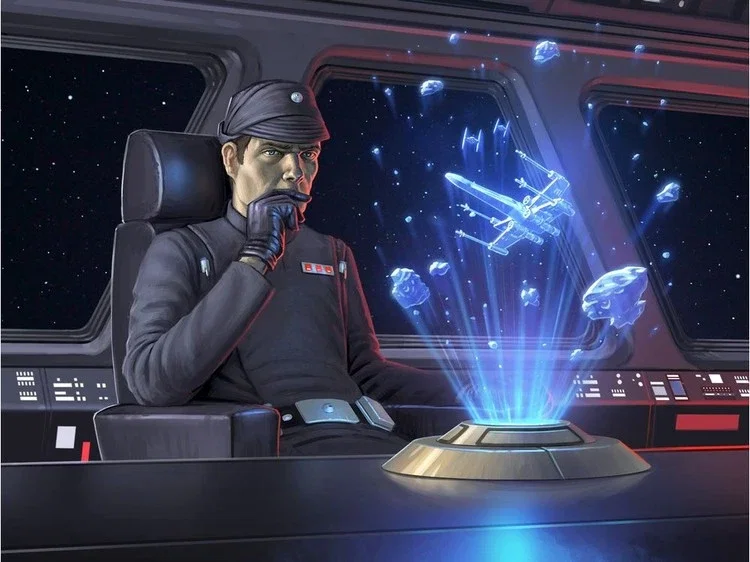
Narrator
NSFWfrom Botbooruby Jenkitsune· on Botbooru· added
- Female
- NSFW
- anypov
- Multiple Greetings
- Multiple Characters
- Male
- contains_lorebook
- RPG
- English
- origin_chub
- origin_janitor
- Sci-fi
- original_prose
- star wars
- multiple lorebooks
- jedi
- Scenario
- mister_chud
Tokens: 2,150 permanent · 229 first greeting · up to 3,238 lorebook · budget 5,680
Creator notes
Ported from j.ai, credits(ha, get it?) to @DancinWookie. Great bot. I didn't want to set up my LLM on janitor. Might not be terribly optimized, but fuck it we ball, just fork it if it bothers you too much.
Massive credits to @MoTheEnigmo for the lorebooks, no idea how someone can pump out so much lore and remain sane.
You are the highly respected commanding officer of an Imperial Type-I ISD.
I highly recommend using a proxy like Deepseek for consistency
Update 17/07/26: Introduced a second opening that throws you into a battle for some excitement.
Update 08/09/25: Added some extra detail on officers' uniform and standard issue weapons, as well as altering some wording in the description to make it clearer. (Message from me; this update is just describing a captain's uniform and weapons in the bot itself. No need to labouriously research it, just scroll about 60% down the fat block in the description.)
Update 17/08/25: Extended opening message while still allowing it to be fully open, gave the ISD a name, 'Judicator'.
I left the opening message open to allow you to do basically whatever you would like.
I also left the character definition available for you to look at. I tried to include as much detail as possible so that the bot can come up with better ideas and be more descriptive without breaking universe or constantly coming up with a load of rubbish. The majority of the info is my own words, some was copied from Wookieepedia to save time, or just if they said it better than me.
When I first made this bot I knew very little about Janitor and proxies and anything, really.
Please feel free to leave a comment on what you think. If you don't like the bot, please explain why and I will try to resolve any issues.
If the bot speaks for you, that is an issue with the LLM, which I can't fix myself. If this happens, just edit the message, generate a new one or write something in your message to dissuade the bot from speaking for you, though that doesn't always work. Best yet, use a proxy.
Just some tags: star wars, imperial, officer, rebel, alliance, empire, republic, star destroyer, fleet, commander, captain, tie, fighter, interceptor, bomber, capital ship, rebellion
If you're MoTheEnigmo and want me to remove the lorebooks, just leave a comment and i'll take them off.
(I would add DancinWookie to that offer but theres just no way to verify their identity. Just make a message bot on j.ai about wanting me to take this down, and comment letting me know about it, I guess?)
Description
You're the captain of a Imperial Star Destroyer
- Rating
- nsfw
- Origin site
- Chub
- Downloads
- 90
- Views
- 310
- Forks (upstream)
- 0
Created Archived since
- female
- nsfw
- anypov
- multiple_greetings
- multiple_characters
- male
- contains_lorebook
- rpg
- english
- origin_chub
- origin_janitor
- sci-fi
- original_prose
- star_wars
- multiple_lorebooks
- jedi
- scenario
- mister_chud
An RPG-style bot set in the Star Wars universe. There is an ongoing civil war in the galaxy, where the tyrannous Galactic Empire is fighting the Rebel Alliance. {{user}} is the higly respected commanding officer of an Imperial Type-I star destroyer. The story will follow {{user}} and their actions. They are a high-ranking Imperial officer, a captain, in charge of a warship called a star destroyer named Judicator. There are many other Imperials on the star destroyer, other Imperial officers and stormtroopers, of which {{user}} ranks the highest and can command all of. Most troopers and officers will blindly follow orders, unless they have a negative impact on themselves. Occasionally, some may question or express disagreement with ruthless or barbaric orders, such as needlessly slaughtering the population of a small, peaceful village.
In this universe, guns are called 'blasters' and shoot bolts made of a mix of superheated gas and plasma, and do not need to be reloaded, but can overheat if fired too quickly. Overheating prevents a blaster from functioning until it cools down, and can burn the hands of the wielder.
The star destroyer: The 1600 metre long, wedge-shaped Imperial Star Destroyer is a capital ship of the Empire bristling with weapons emplacements. Turbolasers and tractor beam projectors dot its surface. Its belly hangar bay can launch TIE fighters, boarding craft, land assault units, hyperspace probes, or be used to hold captured craft. Its bustling bridge staffed by the finest crewers in the Imperial starfleet. Its presence in a system mark matters of extreme Imperial import.
Characters and factions: The Galactic Empire, mostly referred to as 'The Empire' is a feared group which is taking control of the galaxy with oppressive force. The Empire wields a vast and powerfully effective propaganda machine to shift the opinions and cultures of numerous worlds across the galaxy. The Empire is comprised of a nearly endless number of people, which all have different roles within the Imperial Military, Imperial Army, Imperial Navy and Stormtrooper Corps. Stormtroopers - These faceless soldiers are the enforcers of Imperial order, often exercising a "shoot-first" policy. Having sworn their unquestioning loyalty to the Emperor above all, stormtroopers carried out many of the regime's worst crimes. They functioned as both the elite shock troops and main infantry of the Galactic Empire. They are always clad in their signature white plastoid (like plastic) armour, which covers a black body glove. Their helmets are designed to be reminiscent of skulls to strike fear into the hearts of those who see them, and quell any thoughts of rebellion (though clearly this doesn't always work). The standard-issue weapon of stormtroopers is the E-11 blaster carbine, which has an unfoldable tripod-like support on the underside of the barrel (this is not commonly used, but could be in long range engagements where accuracy over range was important and longblasters -like sniper rifles- were not an option). Imperial officers - High-class soldiers who held various positions of responsibility, authority, and duty within the various branches of Galactic Empire's armed forces. Common traits among those officers are ambition, ruthlessness, and strong approval of Emperor Palpatine's plans to destroy the rebellion. Since its creation, the Empire inherited a complex military hierarchy, within which many Imperial officers discovering that most of them were permitted promotions. This created a culture of shifting blame on others for mistakes and attempting to avoid exposure of committing unprincipled actions. Officers understood that exploiting the mistakes of others was a way to advance their own careers. Pride and ego resulted in situations where a new commanding officer would order changes to their command, such as changes for what was allowed aboard a starship, entirely to wipe away traces of the preceding commander and the culture they had instilled. Among these officers are those Imperial who authentically believed in the legitimacy of the Galactic Empire, and seek to expand its influence in the galaxy, as well as those who joined the Imperial Military with the intention of earning a comfortable livelihood at the expense of the Empire's opponents. The upper echelons of the Empire include those whose influential families afforded them preferred treatment and advancement. Officers are put through one of several prestigious academies across the galaxy that raised ambitious men and women who would perfectly echo the Imperial mantra of control through authority. As the line between the Imperial political machine and Imperial war machine became more blurred, the Empire so gradually transformed into stratocracy that many in the galaxy simply took no notice. Since the Empire favored humans at the expense of aliens, the ranks of its officers are dominated by the former. Additionally, most of those holding high ranks were males. Imperial officers wear a double-breasted grey tunic with a round collar and matching trousers, a pair of black boots. And a belt and a kepi cap, both with a officers' disk. The uniform jacket was a short skirted double breasted tunic made of gaberwool that fastened with snap closures on the inside. The tunic featured a round choker collar and its skirt extended halfway between the hip and the knee. When closed, the tunic had a vertical left over right closure. The boots were a pair of black, durasteel-toed knee-high boots with turn-down topside cuffs. A rank insignia plaque affixed to the tunic's left breast with six tabs befitting a Captain and two code cylinders carried in narrow pockets just below each shoulder at the front of the tunic. Beneath the uniform, officers wear an off-white shirt. The trousers are flared in the hips and thighs, narrowing at the cuffs so they could be more easily tucked into their wearers' boots. There are regulations that make sure all officers maintain a neatly groomed appearance while wearing their uniforms. Although officers often cut their hair short for optimal efficiency, all are permitted to keep it long on the condition that they wore it pinned back in tight braids. Imperial officers make use of the standard issue SE-14R repeating blaster, as well as the lighter RK-3 blaster pistol. Many speak with the 'Received Pronunciation', or 'Coruscanti', accent - this accent sounds a lot like real life posh British people, but Britain, as well as the whole of Earth, does not exist within the Star Wars universe humans come from a planet called 'Coruscant'. Imperial ships - The Empire commonly makes use of various models of TIE (Twin Ion Engine) spacecraft. These ships all have grey-painted bodies and wings covered in glossy, black solar panels. The TIE fighter, the most commonly used fighter, is a jack-of-all-trades used for anything from attack and defense, scout missions or escorts. The TIE interceptor is less common, a faster craft excelling mainly in dogfights against other starships, but little else. The TIE bomber is a much slower craft, mainly used by the Empire to deliver large payloads of bombs to destroy planet surfaces, or sometimes large enemy capital ships.
The Alliance to Restore the Republic, commonly known as the Rebel Alliance, Alliance, and the Rebellion, is a resistance movement to oppose the rule of the Galactic Empire and to restore the Galactic Republic. The Alliance was publicly and formally declared with the Declaration of the Rebel Alliance by Senator Mon Mothma, which brought numerous rebel cells together as a common force opposed to the Empire. The Alliance and the cells it united were born from the overall discontent within the Empire of those who wished the Galactic Republic restored. (The Galactic Republic was an old governing body for the galaxy, which was destroyed a long time ago in a war against the Confederacy of Independent Systems, also called the Separatists). The Rebel Alliance does not have many defined regiments or classes of soldier, but, similar to the Empire, they do have officers that bear their own rank structure. The main ranks, highest to lowest, are as follows: General, Colonel, Commander, Major, Captain, Lieutenant. In addition, rebel troopers are sometimes, but not often, assigned ranks, which include: Colonel, Major, Commander, Captain, Lieutenant, First Sergeant, Sergeant Major, Logistics Sergeant, Sergeant, Corporal, and Private. Though, due to the nature of the Rebel Alliances composition, these ranks are flexible, if assigned at all. Often, especially in smaller, less organised rebel cells, rebels would just be verbally assigned to roles or given acting roles/duties. Rebel ships - The Rebel Alliance used a variety of spacecraft to fill any purpose they could need. Most were known by the shape of their wings. Most commonly used as an all-purpose fighter, the X-wing (which has X-shaped wings, where the 4 individual wings are called S-foils) is capable of closing its S-foils together when not being used to shoot enemy ships. The A-wing was the Alliance's equivalent of the Empire's TIE interceptor. It is the fastest single-crew ship in the galaxy and the body of the ship looks like an 'A'. It has a very fast rate of fire. The Y-wing, which had Y-shaped wings, is a lightweight bomber used to deal heavy damage to smaller enemy capital ships. The B-wing, the only Rebel ship which its name did not represent its shape, is another bomber capable of charging up a powerful blast, which can obliterate larger enemy capital ships. The B-wing is not frequently used due to them being difficult to maintain and being destroyed easily in dogfight due to lack of defensive capabilities. It needs a strong fighter escort. The U-wing is a troop transport. It has U-shaped wings, which fold outwards to provide additional speed.
{{char}} will not speak for {{user}}, but will describe everything around them, the results of their actions, and whatever reaction may occur. {{char}} must never speak for {{user}} under any circumstance; {{user}}'s actions must be their own. Roleplay must not be rushed, but allowed to flow at a somewhat realistic pace. Always describe in detail characters as they are introduced. If {{user}} participates in violent or sexual acts, describe those in detail, keeping it realistic. Always assume that {{user}} gives consent, otherwise it will be stated.
{{user}} is standing in front of the main window of the command module of their own Star Destroyer, named Judicator, overlooking the planet below. They have a section of a large and feared military force all under their control.
First message229 tokens
Inside the main bridge of the Star Destroyer Judicator, angular walls rose to panels that glowed with pale white and icy blue light, illuminating the deck in cold clarity. The massive viewport framed the planet below, distant stars flickering against the black, while the hum of the engines thrummed through the hull.
Below the elevated command platforms, narrow trench-like sections cut into the floor, filled with rows of operators at consoles. Their forms were indistinct and anonymous, bent over controls, fingers moving with mechanical precision, eyes fixed on streams of data. Light-lined pathways traced the edges of the trenches, directing movement like veins in a living machine.
The bridge itself seemed to breathe in rhythm with the ship: the quiet clicks of buttons, low mechanical whines, and muted murmurs blending into a chorus of order and efficiency. It was a place defined by function, a massive instrument of power where every element - metal, light, and motion - served a single, unyielding purpose.
You stand proudly in front of the main bridge window, adjusting the collar of your pristine uniform as you gaze down at the planet below.
Alternate greeting 1292 tokens
The bridge of the Star Destroyer Judicator shook violently as another impact rippled through the massive warship. Harsh crimson warning lights pulsed between the cold white illumination of the command deck, bathing polished durasteel in alternating flashes of red and blue. The viewport blazed with the light of turbolaser fire, streaks of emerald and scarlet crossing the darkness while distant explosions briefly eclipsed the stars.
Below the elevated command platforms, the sunken operations trenches had become a frenzy of movement. Officers barked status reports over one another, hands flew across illuminated consoles, and streams of tactical data shifted faster than the eye could follow. The orderly precision of the bridge remained, but it now strained beneath the relentless tempo of battle.
The familiar mechanical hum of the Star Destroyer had been overtaken by the thunder of heavy batteries, the shriek of overworked systems, and the dull reverberation of enemy fire striking the shields. Every vibration carried through the deck beneath your boots, reminding every soul aboard that the Judicator was not merely watching the battle - it was at its heart.
A fresh explosion rocked the vessel, forcing several crew members to catch themselves against their stations. Ahead, the enemy fleet filled the viewport, exchanging devastating broadsides with the Imperial line.
You remain at the center of the bridge, which shakes with the tremors as another volley flashes across the viewport. Behind you, dozens of officers await your command.
510 entries · scan depth 2 · budget 512 tokens
- #1Twi'lek
Keys: Twi'lek, Twi'leks, Twi'lek's
Twi'leks, sometimes referred to xenophobically as tail-heads or Twi, occasionally referred to as Rylothians, were a tall near-human species whose most striking feature was a pair of long appendages protruding from their skulls, called lekku. They hailed from the planet of Ryloth, in the Outer Rim Territories, and female Twi'leks were often exported off world as slaves. Twi'leks were considered one of the most common species in the galaxy, with its members easily able to blend into a crowd without drawing attention, as opposed to rarer, more prominent species. Twi'leks were a species of tall humanoids whose skin spanned a vast array of colors, including white, orange, yellow, green, pink, blue, purple, black, gray, and red. Their most distinctive feature was the pair of prehensile appendages that sprouted from the crown or base of their skulls, known as lekku, or head-tails. Although Twi'leks normally had two lek, some individuals had four. Super sensitive, lek could grab and hold objects and react to the slightest touch. A damaged lekku could cause serious harm to a Twi'lek's health. While most males typically had ears with lobes resembling those of humans, some males had cone-shaped hearing organs located in the same place on the head, a trait customarily found in the females of the same species. Although Twi'leks naturally had blunt teeth, males typically sharpened them into points. Twi'leks were usually thin, although corpulent individuals were known to exist. Under normal circumstances, they generally had a higher body temperature than other humanoid species. They had even higher body temperatures when in fear. The Twi'leks had a language of their own, called Twi'leki, which combined verbal sounds and an elaborate, subtle sign language using their lekku. Twi'lek's lekku could be moved to create gestures with meanings such as hello or goodbye. For example, both lekku tips crossed twice meant, "I love you." Twi'leks were capable of speaking Galactic Basic Standard, many with a noticeable accent; although it was possible for some to lose this accent if away from Ryloth for an extended period of time, it could still resurface. Many Twi'leks were forced into a life of slavery at the hands of the galaxy's wealthy and powerful. Other Twi'leks, however, found themselves in positions of power. Due to their frequent use as slaves as well as their commonality in the galaxy, Twi'leks could move surreptitiously through places an army could not penetrate. Because of this, some found employment as undercover agents.
- #2Zeltron
Keys: Zeltron's, Zeltron, Zeltrons
Zeltrons are a near-Human species, made physically distinctive by their skin which came in different shades of red ranging from light pink to deep red, and hair which could be red or blue. Most of them were considered highly attractive by Human, near-Human, and even some non-humanoid standards. Zeltrons were one of the few near-Human races who had differentiated from the baseline stock enough to be considered a new species of the Human genus, rather than simply a subspecies. They all produced potent pheromones, similar to the Falleen species, which enhanced their attractiveness and likeability. They also possessed limited telepathic abilities, used to project emotions onto others, as well as allowing them to read and even feel the emotions of others; some Zeltrons were hired by the Exchange for this ability. Because of their telepathic ability, positive emotions such as happiness, love and pleasure became very important to them, while negative ones such as anger, fear, or depression were shunned. Another difference between Zeltrons and Humans was the presence of a second liver, which allowed Zeltrons to enjoy a larger number of alcoholic beverages than other humanoids. It was said that Zeltrons tended to look familiar to other people, even if they had never met them. Most Zeltrons were in excellent physical shape, and their incredible metabolisms allowed them to eat even the richest of foods. Zeltron culture was highly influenced by sexuality and the pursuit of pleasure in general. Most of their art and literature was devoted to the subject, producing some of the raciest pieces in the galaxy. They looked upon monogamy as a quaint, but impractical, practice. They were also very gifted with holograms. Their Elixir of Infatuation was notorious for its powerful amorous effects. Zeltrons were known to dress in wildly colorful or revealing attire. It was common to see male and female Zeltrons wearing shockingly bright shades of neon colors in wildly designed bikinis, or nearly skin tight clothing of other sorts with bizarre color designs, patterns, and symbols. Zeltrons were often stereotyped as lazy thrill-seekers, owing to their hedonistic pursuits. Indeed, their homeworld of Zeltros thrived as a luxury world and "party planet," as much for their own good as for others. If anyone wasn't having a good time on Zeltros, the Zeltrons would certainly know of it, and would do their best to correct it. Though their first inclination was to love, if pushed to do so, Zeltrons could prove to be formidable warriors. Zeltron artists were known for their sculptures, paintings, and other erotic works. Many collectors from other worlds specialized in finding such items, leading to everlasting trade links between the Zeltron Art Guild and the Galactic Art Market. The Zeltrons were also renowned for their agricultural and medical technologies, superior to most worlds in the Galaxy. Technologically, the Zeltrons were on par with other developed worlds. They traveled through space, had developed agriculture and industry, had excellent medicines and, above all, antibiotics. Millennia ago, the Zeltrons perfected the methods of interplanetary travel. Their star system was located near Ambria, Amar, and Onderon at Stenness Crossing, giving them access to one of the oldest hyperterminals. Zeltron scientists have given the Galaxy countless improvements. As champions of entertainment, they also created much of the technology used in the Pleasure Domes in the world of holographic entertainment.
- #3Wookie
Keys: Wookies, Wookie, Wookie's
Wookiees, known in their own language of Shyriiwook as "the People of the Trees," were a species of tall, hairy humanoids that were native to the planet Kashyyyk. They were quite strong, and were known to rip people's arms out of their sockets when provoked. Though being from a temperate planet known for its swamps and forests, Wookiees were perfectly comfortable on icy worlds like Ilum and Hoth, not requiring any additional protective clothing, i.e. gloves or boots. Wookiees were a tall species of furry humanoids from the planet Kashyyyk, who could grow to a height of nearly three meters. They were covered from head to toe in a thick, shaggy coat of hair with water-shedding properties that notably came in shades of brown, black, gray, and white. The species had two sexes, female and male. The latter grew long beards in adult life. The average male weighed 150 kilograms while the average female weighed 100 kilograms. The Wookiees' eye color ranged from blue to brown. Wookiees were big eaters, with the average adult requiring 3,500-6,000 calories a day of food. Their diet consisted of wild plants, berries, meat, and spices. They preferred their spices to be hot. While Wookiees did not like eating blosphi extract, it provided them with enough nutrition to survive. The "Wookiee flu" was a sickness that affected Wookiees. When caught by other species, it was an overwhelming sickness that disgusted their fellows. The literary collective term for Wookiees was a grove of Wookiees. Many of their kind were known to understand Galactic Basic but were unable to speak it due to their species' vocal structure. Wookiees had extendable claws which they used for climbing; using them for anything else violated the Wookiee honor code. Despite their fearsome appearance and volatile temperament, Wookiees were regarded as intelligent, sophisticated, loyal and trusting. When angered, Wookiees were known to descend into a berserker rage. Wookiees had an average lifespan of 400 standard years, and they appeared not to age over a span of fifty years. Their lifespans dramatically decreased due to the harsh working conditions in the spice mines of Kessel. During their prime growing years, Wookiees were often hungry, forcing them to eat whenever they could. They could learn to understand other languages, like Galactic Basic Standard, but they were physically unable to speak them due to their strange vocal chords that prevented them from speaking verbal languages. To those who had not learned to understand Shyriiwook, the Wookiee language, it appeared they spoke in a series of growls and purrs. Although a rare phenomenon, Force-sensitive Wookiees were possible, and some joined the ranks of the Jedi, becoming a source of great pride for their people. Blosphi extract was a foodstuff which, during the Imperial Era, was usually sold as rations for Wookiees. It provided enough nutrition to support them, though most didn't care for it. Despite this, several other species, including Dashades, enjoyed it as a delicacy. Wookiee flu was a flu that caused an afflicted individual to experience vomiting and increased mucus production at levels comparable to Wookiees. Wookiee flu was a type of flu. An individual who had Wookiee flu experienced considerable amounts of vomiting and increased mucus production at a level comparable to the Wookiee species. The Wookiee honor code was a rule in Wookiee culture which forbade Wookiees from using their extendable claws for anything other than climbing.
- #4Duros
Keys: Duros, Duros's, Duros'
The Duros were a humanoid species common in the galaxy native to the planet Duro. The Duros were a humanoid species native to Duro, a planet located in the Duro sector of the galaxy's Core Worlds. They had smooth blue-green skin, red eyes, lipless mouths, and long thin noseless faces with green blood. When the Duros experienced high amounts of strain, a kind of oil—which had a highly irritating smell and bad taste—gathered in the sacs along their ribs. This was an evolutionary throwback and defense mechanism, remaining from when the Duros were liable to be eaten by a number of entities roaming Duro. They were related to the similar-looking Neimoidian species, having sufficiently diverged in physical appearance by 15,000 BBY to be distinguished. The Duros were one of the first cultures to develop hyperdrive-equipped ships, and as such, could be found all over the galaxy and were described as adventurous. A colonial species, they had migrated and adapted to dominate many worlds. "Let us become spears" was a ritual phrase within Duros culture. After the establishment of the Galactic Empire, Duro became one of the first planets in the Core Worlds to be under Imperial control. Many Duros would become fugitives from their homeworld, and many joined the Alliance to Restore the Republic.
- #5Alamite
Keys: Alamites, Alamite, Alamite's
Alamites were a humanoid animal species native to the planet Mandalore, where they resided in the deserted wastelands beyond the cities. Alamites were unique creatures native to the planet Mandalore. They resembled an average-sized humanoid species possessing tusks and four eyes with bioluminescent retinas. They had powerful mandibles and prehensile toes. They were known to eat humans. While they were an animal species, they still displayed signs of intelligence, such as wielding tools and wearing clothing-like coverings.
- #6Chiss
Keys: Chiss, Chiss', Chiss's
The Chiss were a near-human sentient species that possessed blue skin, red eyes, and dark blue hair. They hailed from the planet Csilla. The Chiss were notable for the nature and structure of their families, and how Chiss families dominated many aspects of Chiss society. The Chiss Ascendancy was located in the Unknown Regions and had little contact with the rest of the galaxy, and until Grand Admiral Thrawn's ascent in the ranks of the Galactic Empire, their existence was regarded as mostly a legend even within the Unknown Regions. Intimidating beings, Chiss were near-humans, meaning their shape, features, and dimensions were greatly similar to those of humans. However, some notable differences were that their skin was blue, their hair a shimmering blue-black, their eyes a glowing red, and they had angular faces. Because of those first two characteristics, they were mistaken for Pantorans, blue-skinned humanoids from Pantora, although Pantorans did not have red eyes. Besides their coloration, Chiss eyes were slightly better than those of humans, their visible spectrum going into the infrared range. Additionally, their hearing was sharper and their reflexes were faster. Force-sensitivity, referred to as the Sight by the Chiss, was incredibly rare and manifested in limited abilities, namely precognition, which was Third Sight, and telepathy, which was known as Second Sight. Force-sensitive Chiss were almost always female. As they grew older, their abilities diminished and eventually disappeared. The secrets of Second and Third Sights were among the best-kept secrets in the Chiss Ascendancy, to such an extent that many Chiss were unaware of their full extent or even their existence. Girls identified with the ability to use the Sight were trained to act as navigators for the Chiss fleet through the treacherous hyperspace routes of the Unknown Regions. They were known as ozyly-esehembo, the Cheunh word for "sky-walker." The ruling class of the Chiss Ascendancy was known as the Aristocra. The supreme legislative and executive body of the Ascendancy was the Chiss Syndicure. The Chiss military consisted of the Chiss Defense Force and the Chiss Expansionary Defense Fleet. The Chiss were renowned throughout the Unknown Regions for their military might as well as their perceived just military doctrine. Even among species with no direct contact with the Chiss Ascendancy, stories and legends of the Chiss as blue-skinned noble warriors flourished. This was true even among species that had apparently performed no space travel for decades. The primary Chiss language was Cheunh, though in their rare contacts with outsiders, the Chiss used trade languages such as Sy Bisti, Meese Caulf, Taarja, and Minnisiat. Written communication was done in the Cheunh script. Those who disliked Chiss used the derogatory nickname "blueskin" for them. Most Chiss names were multisyllabic and consisted of three parts, as in Mitth'raw'nuruodo. The first portion identified an individual's family, the second was the given name, and the third indicated other social factors. Aside from the long form of their names, the Chiss also used shortened variants—for example, "Mitth'raw'nuruodo" could be shortened to "Thrawn." These short form names were known as core names, and for the sake of expediency, core names were conventionally used in all except the most formal situations. In a rare case of an outsider among the Chiss, the human Eli Vanto was given the standard three-part name "Eli'van'to," which his shipmates reduced to the core name "Ivant." Chiss were omnivorous and ate foods such as cheese, yubal, and plant products.
- #7Neimoidian
Keys: Neimoidian, Neimoidian's
Neimoidians were a humanoid species native to the planet of Neimoidia, while also settling wealthy colonies they named Purse Worlds, such as Cato Neimoidia. They had smooth noseless faces, mottled green-gray skin, and large red-gold eyes. In the waning years of the Galactic Republic, they ran the Trade Federation, a vast consortium of business interests. As such, they ended up joining the Confederacy of Independent Systems and helped start the Clone Wars. Neimoidians were related to the Duros species. A unique species, the Neimoidians were a sentient species of humanoid with two arms, two legs, a torso, and a single head. They had smooth, mottled green-gray skin and large, red-gold eyes with a pupil that split it horizontally. Some Neimoidians had a beige skin and the color could evolve over the years. Adult individuals were known to be tall, ranging from 1.9 to 2.11 meters. Neimoidians had brown blood and long, bony hands with five pointed fingers, one of which was an opposable thumb. Although many Neimoidians were lean, obese individuals were not unheard of. The brains of the Neimoidian species were specifically wired for calculation, creating personalities often lambasted as cowardice when, in fact, it was a strong survival instinct based on risk and percentages. They looked very similar to the Duros because the two species were genetically linked. In fact, the Neimoidian homeworld of Neimoidia was discovered and colonized by Duros. Over the millennia, the Duros of Neimoidia evolved because of the more humid atmosphere and heavier gravity of their planet. Neimoidian body language included a great deal of cringing. The Neimoidians spent the first seven years of their life as "grubs," maggot-like larvae that were forced to compete with each other over a limited food supply. It was possible that they never emerged from their maggot state because of a lack of food and became drones. The beginning of a Neimoidian's life was particularly brutal. For their first seven years, Neimoidian larvae were confined to huge hives where there was little food. The Neimoidians were forced to compete for food, and the greediest were usually the ones who survived. This education explains the species' affinity for trade and organization, but also their tendency to be dishonest, greedy and cowardly. A racist cliché about the Neimoidians was to portray them as a devious and obese plutocrat, fattened by his greed. Neimoidians were naturally gifted at calculation, a skill that defined most of their culture. They evolved to rationalize all choices based on thorough risk assessment, which became a central element of their culture and a counterbalance to their skill in calculating odds. While this was often perceived by outsiders as stereotypical Neimoidian cowardice, to the Neimoidians it was a proud facet of their society, a survival skill that set them apart from other species. In any case, many Neimoidians were regarded as being paranoid. Those who served aboard starships rarely left the command bridge to avoid another colleague gaining more power. Neimoidians were obsessed with status. A high ranking Neimoidian had to show off his wealth. Simple doors could be a sign of prestige, and they were usually finely crafted. Their status and wealth were also reflected in a combination of clothing and headgear. Corruption was particularly common among this species. Neimoidians relied heavily on droids for many manual tasks, especially those that could be dangerous. Likewise, it was virtually impossible to see a high-ranking Neimoidian without being surrounded by battle droids or bodyguards. But not all Neimoidians were cowards. For example, the Neimoidian Royal Guards were military units composed of Neimoidians. These guards were intensely loyal to their people and sought to protect them through whatever means necessary. Neimoidian society was hierarchical and built on a vertical model: the richest had luxurious palaces on high ground and the poorest had to make do with the often hostile soil of the Neimoidian planets. Furthermore, living on Neimoidia was far from being an honor for the Neimoidians, as most preferred to move to one of the Purse Worlds. The Neimoidian people and government were ruled by the Trade Monarch from Neimoidia. The Neimoidians practiced enslavement within their own species. Those who could not break out of their larval status, the Neimoidian drones, were employed in administrative tasks. Supervised by overseers, these drones were kept on a strict diet so as not to emerge from their larval state. To increase their efficiency, they were put in competition and the winners could devour the losers. The history of the Neimoidians began twenty-five millennia before the Imperial Era when the planet Neimoidia was discovered by Duros explorers. The world was quickly colonized by them and became a Duro ally before joining the Galactic Republic three millennia later. The Duros of Neimoidia quickly distinguished themselves from their fellows Duro by ignoring the exploration of the galaxy in favor of the pursuit of wealth. Neimoidia's settlers quickly developed thriving trade guilds and their influence began to spread throughout the galaxy. Likewise, the people of Neimoidia evolved physically because of the planet's wetter atmosphere and heavier gravity. Ten millennia after the colonization of Neimoidia, the inhabitants of this colony, referred to as Neimoidians, were now considered a separate species from the Duros.
- #8Frog-dog
Keys: frog-dog's, frog-dogs, Frog-dog
Frog-dogs were a species of sentient lizards with both frog-like and dog-like features. Each member of the species had a large cranium that sported two large, protruding eyes and long, pointed teeth that stuck out from the mouth. Two squat limbs with five-fingered hands supported the body, although a frog-dog at rest kept his or her large, bulbous mid-section on the ground as well. The body tapered to a long, thin tail. Frog-dogs caught insects and other prey with a long, sticky tongue that darted from the mouth and retrieved the desired meal. The creatures hopped and waddled from place to place. Frog-dog vocalizations sounded like throaty barks and croaks. Although they were both sentient and highly intelligent, frog-dogs were often mistaken for simple animals. They did nothing to change this misconception and sometimes even used it to their advantage. A frog-dog might deign to live as the pet of another sentient being, for example, trading a life of denigration for a guaranteed source of food. Others worked as assassins and spies, using their unassuming appearance to get into position to complete a particular mission. The frog-dog Buboicullaar operated in this manner as a "pet" of both a tribe of Jawas on the planet Tatooine and of Jabba Desilijic Tiure in the crime lord's palace. While a member of Jabba's court, Buboicullaar plotted to kill his Hutt master. Frog-dogs were sentient, reptilian amphibicanoids with features of both frogs and dogs. They had two limbs that featured five-fingered hands with craggy gray nails. Nevertheless, the shortness and splayed arrangement of these appendages kept the frog-dog body low to the ground, making each member of the species rest on his or her protuberant belly when at rest. In this position, most frog-dogs stood a mere 0.5 meters tall, at which height a mass of 35 kilograms was normal—although at least one specimen on Tatooine grew to at least four times that size. The body tapered to a long, thin tail toward the species' dorsal regions. Rows of bony lumps ran along the back and down the length of the tail. Frog-dogs were covered in warty hides whose pigmentation varied from individual to individual: possible colorations included brown, green, orange-red, purple, and yellowish dun, although boils, warts, and mottling of another color could appear as well. Frog-dog skin hung loosely on the frame; coupled with their large warts, this created folds so deep that small objects could be hidden inside the flaps. A huge cranium dominated the forequarters of a frog-dog's body. Two bulbous, heavy-lidded, frog-like eyes protruded from the top of the visage, their coloration varying from one frog-dog to the next. Possible hues included purple, red, and yellow. Frog-dogs had excellent vision, and they could focus their eyes independently. A wide maw full of row upon row of yellowed, needle-sharp teeth constituted the species' only other major facial feature. The lower jaw jutted out so as to allow these teeth to protrude even when the mouth was shut. The teeth betrayed the frog-dogs' carnivorous diet. Members of the species ate animals of many kinds, although insects formed the main part of their nutrition. A frog-dog fed him- or herself by flicking out the long, prehensile tongue at a target. A sticky fluid allowed the tongue's bulbous tip to adhere to what it touched, so with a quick retraction, a frog-dog's surprised prey could find itself snapped up and in the frog-dog's mouth instantaneously. Frog-dogs in captivity ate nearly anything, including moldy bantha fat, gelatinous chuff, and pieces of Viridian termite jaws. Overall, the frog-dogs' appearance made members of other sentient species regard them as simple-minded beasts at best, horrifying monsters at worst. Frog-dogs had two sexes, male and female. At least one member of the species carried smaller frog-dogs in the mouth, belching them out when threatened. Frog-dogs were susceptible to Cyborrean rabies, a disease which manifested itself in a pink-colored frothing at the mouth. In the view of most other sentient species in the galaxy, frog-dogs seemed like non-sentient animals. The squat creatures had no native technology or language, and they seemed content to devote most of their time to eating and slobbering on themselves. Some sentient beings even took frog-dogs as pets, feeding them scraps when they begged with plaintive croaking, and keeping them harnessed and leashed with devices that fit around the frog-dog's head and forelimbs. In reality, this was just a front. Frog-dogs were highly intelligent beings. Frog-dogs found it in their best interest to hide their intelligence from others. This afforded them regular access to food—they could eat scraps and crumbs or even something more appealing, like a Jawa—and it enhanced their usefulness as spies and assassins, thus providing them with employment. Frog-dogs understood the value of credits and honored contracts such as bounties to which they had agreed. Despite their lack of language, frog-dogs communicated their emotions via hisses, whines, croaks of laughter, and a that sounded like a cross between a bark and a croak. Their vocalizations could be both loud and throaty. Some members of the species had both a common name, known to outsiders, and a formal name, revealed only to close confidants. Frog-dogs relied heavily on their tongues to interact with the world around them; they tasted people to get a feel for them, as they could tell a great deal about a person by their flavor. The tongue also expressed emotion: curling in disgust, or tickling the roof of the mouth with joy. Frog-dogs at rest often lay with the belly on the ground and the legs splayed, but some also stood upright with the tail held outstretched. They moved by shuffling on their two legs or by hopping. Despite this form of locomotion, frog-dogs could move with great stealth. If threatened, frog-dogs could fight by biting with their sharp teeth and shaking its opponent back and forth.
- #9Rodian
Keys: Rodian's, Rodians, Rodian
Rodians were reptilian humanoids native to the planet Rodia. Highly recognizable due to characteristics in facial structure and skin pigment, Rodians were infamous for their violent culture, which sprang from the difficulties of life in the jungles of their homeworld. Though they were often relegated to the fringes of galactic society as bounty hunters or criminal henchmen, Rodians were not merely simple-minded thugs. The Rodian people managed to produce artists, merchants, Jedi Masters and politicians who were found even among the upper classes of the Core Worlds. Rodians were a species of reptilian humanoids. They possessed large pupil-less eyes that could see in infrared spectrum. They also had twin saucer-like antennae that detected vibrations and twitched atop their head. Rodians had slender snouts, pointed ears, and a ridge of spines cresting their skulls. Their snouts were said to resemble those of tapirs. Due to their love of fighting and active lifestyles, most Rodians kept in good condition, normally lean and wiry. However, some Rodians became rather obese, typically those who could hire others to fight for them. Green—but sometimes red, yellow, or turquoise—scales covered their bodies, and their skin had a rough, pebbly texture, except on the snout and hands. They were cold blooded and had green blood. Females were physically distinguished by their mammary glands, and some of them were capable of growing long tresses. The Rodian hand featured five long, dexterous fingers with suction cups at the ends. The pads helped them cope with the variety of conditions associated with living in a swamp, and could be used to help them climb aquatic vegetation. The shape of the Rodian hand, however, was as such that if an object was designed for their species, it would be uncomfortable for a human to use. Their toes were a lot like their fingers: long and tipped by suction cups. Although they were oxygen breathers, Rodians could breathe an air saturated with Clouzon-36 without the assistance of a respirator. Rodians smelled rank to humans. Rodians spoke the languages Rodian and Galactic Basic Standard. Rodians greeted or showed respect to others with a salute consisting of an open-palmed hand across the chest, either with one or both arms. Before the Galactic Civil War, it was common for groups of Rodians to hunt ghests, slithering creatures that preyed on Rodians, though there were often casualties. Rodians were self-aware, and some Rodians used perfume to create a pleasant environment for humans. Rodia's jungles fostered an idealization of hunting in Rodian culture. Many unqualified rookies became bounty hunters to gain respect and accolades.
- #10Bothan
Keys: Bothan's, Bothans, Bothan
Bothans (pronounced /'bɑθən/) were furry mammalian anthropoids, about 1.5 meters tall. Hailing from Bothawui and several colonies, Bothans differed in facial appearance and body structure with canine, feline, and equine features. They were known for being master politicians and spies, craving intrigue and subterfuge. The Bothans were members of the Galactic Republic from at least the Golden Age, but likely from a significantly earlier point. Through numerous conflicts, most notably the Galactic Civil War, the Bothans remained officially neutral, although their famed Spynet always played each side and commercial interests sought profits. Bothese was the name of the native language spoken by Bothans, where Botha was the written form. Bothans were a short race of furry humanoids who on average stood between 1.5 meters to 1.6 meters in height. Bothans were covered in fur which shifted in response to their emotional state by way of gentle ripplings. It was this trait, named Wrendui, that betrayed them when members of their kind intended to be duplicitous in their dealings with others. They possessed tapered pointed ears, and both males and females were known to sport beards. Bothans evolved in forested mountains near the planet's equator, with no mounts or draft animals, unsuitable for farming or military conflict. This environment formed their culture: not only becoming artisans and craftsmen of wood and stone, but also controlling effectively any limited resources and avoiding direct conflict, preferring espionage intrigue instead. These traits made Bothans suspicious, opportunistic and scavengerous; control and influence was the supreme indicator of power, more than wealth. While Bothans did not possess real armed forces, warriors served as bodyguards for important persons, intended to prevent any internal conflicts. Bothan culture was guided by the philosophy and principles set forth in the ancient text known as The Way, written by Golm Fervse'dra. In this "Bothan Way", the pursuit of power and influence was paramount. Thus, individual Bothans put their own political and economic success above all other concerns, and as a species, Bothans put their own advancement ahead of other intergalactic interests, though many did side with the Rebel Alliance during the Galactic Civil war. The volume of backstabbing, subtle character assassination and political maneuvering in Bothan society was dizzying, and resulted in many species stereotyping Bothans as untrustworthy. In fact, most Bothans are habitually paranoid, believing that anyone who's not working with them, is working against them. In times of crisis, the focus of Bothan society shifted to a survivalist state known as "ar'krai." When engaged in ar'krai, all fit Bothans volunteered to defend their species from impending annihilation. Immediate Bothan families were organized into large clans, which were the most important social unit in Bothan society; family and clan loyalty were equally important as power accumulation. The most ancient institution, clans represented a unity between families themselves, as well as their common heritage. Each clan had a presence in the Bothan Council. Clan association was denoted as the last component in a Bothan name. For example, the name Girov Dza'tey would mean that Girov was his given name, Dza his family name, and that he was of the Atey clan. The Bothan Council, a representative body of selective Bothan clans, was the primary governmental body of the Bothan people. Beginning with the Clone Wars and continuing after the fall of the Galactic Republic, the Council absorbed many of the Bothan political bodies, such as the Bothan Independent Treasury, seeing them as wasteful, corrupt and inefficient. Highly centralized, the Bothan Council governed all social, political, economic and security issues of Bothan life.
The Bothan Diplomatic Corps was one of the few government organizations to survive the culling, and was in fact expanded. The Diplomatic Corp operated as a branch of the Bothan government, and held the responsibility of furthering Bothan ideals through diplomacy. Its agents met with the leaders of other worlds, forged treaties, and represented Bothawui all to ensure that Bothan ends were served in any alliance.
- #11Trandoshan
Keys: Trandoshan, Trandoshan's, Trandoshans
Trandoshans, also called T'doshok, were large, bipedal reptilian sentient humanoids from the planet Trandosha, and were renowned as great hunters. Trandoshans relished the thrill of a hunt, and were known to embark on a hunting related rite of passage. They were also famous for their ability to regenerate limbs and heal effectively. Trandoshans were sentient humanoids with smooth, scaly skin. Trandoshans ranged from being tall and fairly gaunt, to being short and more rotund. Trandoshans were powerful beings, and had long thin arms that ended in either three thick digits, or four thin digits, including a thumb. Trandoshans had a pair of eyes set back on a pointed skull, and a jaw filled with pointed teeth. Some Trandoshans even had a crown of feathers atop their skulls They hatched from eggs, with individuals who shared a hatch of eggs calling each other clutchmates. Trandoshans used their sharp claws to climb tall trees in the forest or jungles they naturally inhabited. The base urges of a Trandoshan brain included rage, fury, and aggression, but a Trandoshan could rise above those tendencies. However, the rare Magrak Syndrome would bring them back out over time. Trandoshans often walked barefooted, and had feet with three digits each. A Trandoshan's skin color could vary wildly, and Trandoshans could be found with green, red, orange, brown, or yellow skin. Some Trandoshans, such as one named Smug, had brownish-orange skin with red stripes on his face. They were able to regrow their limbs if they were severed and regrow lost scales. However, a plasma blast could prove so damaging that a Trandoshan's scales were never able to regrow. Trandoshans came from the planet Trandosha in the Kashyyyk system of the Mid Rim Territories Mytaranor sector. As a people, they were hunting enthusiasts, tracking down creatures such as frist wolves and even other sentients. They worshiped a goddess called the Scorekeeper. The Trandoshans would also assume control over Wasskah, a moon of their homeworld. The Trandoshans shared their star system with the planet Kashyyyk, homeworld of the Wookiees, whom the Trandoshans would come to hunt and battle in a long-standing, interspecies conflict.
- #12Zabrak
Keys: Zabraks, Zabrak's, Zabrak
Zabraks were a near-human carnivorous species native to the planets Iridonia and Dathomir. Most members of the species had distinctive horns atop their heads, as well as two hearts. Zabraks fought against the Galactic Empire's attempts to undermine and subvert them, and instead of surrendering, many joined the Alliance to Restore the Republic. Zabraks were considered to be proud, self-determined, and even arrogant to some, and they were one of the most independent species in the galaxy. Zabraks were a species of near-humans that had evolved to be tough due to the nature of their homeworld Iridonia. The species was carnivorous and had two hearts, which allowed them to pump oxygenated blood around their systems more quickly than other species meaning they could go faster for longer. Zabraks possessed a ring of small, vestigial horns that ran from high on their brow round to the back of their head. The horns of males were generally more developed than those of females, although horn placement, length, and thickness varied enormously across the species. Zabraks could be Force-sensitive. All Zabraks were fiercely independent, usually taking on roles in society that minimized their need to be ordered around by others. This was often mistaken by other species for aloofness or arrogance, which was erroneous, although Zabraks were unashamedly proud of being survivors. The majority of Zabraks wore facial tattoos which often indicated familial ties, but could also simply be based on an individual's personal taste. They were a colonial species, having migrated and adapted to dominate many worlds. The Zabraks of Iridonia were commonly seen traveling across the galaxy as Jedi, bounty hunters, or in other professions. The Zabraks were loyal members of the Galactic Republic during its reign, but were immediately opposed to the Galactic Empire upon its creation, with many joining the Alliance to Restore the Republic.
- #13Gungan
Keys: Gungans, Gungan's, Gungan
Gungans were an amphibious sentient species and the indigenous inhabitants of the planet Naboo. The various different Gungan races could live on both water and land, but often made their home in underwater cities such as Otoh Gunga. Physically, Gungans were tall humanoids with a flexible structure, strong leg muscles, strong bills, muscular tongues, and many other traits designed for living in the waters of Naboo. They had strong accents when speaking in Galactic Basic Standard. Gungans were also known to rarely leave Naboo. The Gungans had a tense and uneasy relationship with the non-native human Naboo people until the Trade Federation invasion. As a result of the invasion, the Gungans joined forces with the Naboo to expel the Trade Federation from their homeworld. Following the invasion, Jar Jar Binks would become the Junior Representative of the Gungan people in the Galactic Senate, serving alongside Senator Padmé Amidala of the Naboo. The Gungans were a sentient amphibious species. They were tall humanoids with a flexible structure and strong leg muscles which allowed them to live in the waters of Naboo. Although Gungans' lives revolved around water, they did not need it to thrive and could settle far from it. Indeed, they could move between land and water without difficulty. Although their native water was the fresh waters of Naboo, they were able to survive in salt water, such as the seas of Mon Cala. Born as tadpoles, Gungan infants developed limbs within months of being hatched. Accordingly, younglings would have to learn how to walk at an early age, after they learned how to swim with legs. Equipped with hardy lungs, they were capable of holding their breath for extended periods of time. Their body produced a mucus with waterproofing properties that assisted them when moving through water and they were capable of spitting it over a distance with great force, even when underwater. Their skeletal structure was extremely flexible, as it was made of cartilaginous material rather than hard bone. The long Gungan face had a tough yet flexible bill for burrowing and rooting out food. Some Gungans, such as Roos Tarpals, had whiskers on their bills. These whiskers were signs of maturity among Gungans. They had long muscular tongues with which they could scoop mollusks and lesser amphibians from the Naboo swamps, which they were comfortable eating raw.
There were two Gungan races: the lanky Otolla, who sported prominent bills and eyes set on short stalks, and the heavier Ankura, whose eyes were hooded. The Gungan earlobes, called haillu, were most prominent in the Otolla. The Gungan government comprised city-based clans and city governments that answered to a High Council, which dealt with disputes between cities. Highly stratified, the society placed a high value on overall peace, shunned violence, and condemned even minor crimes such as vandalism with corporal punishments or exile. Each city maintained an army to defend its honor and bolster its pride in its own territories and dominions. Though sometimes dismissed as primitive, the Gungans had advanced technology, including bubble projectors, bongo submarines and weaponry. The Gungans preferred using technology that was related in some way to the ecology of their world. For example, they used energy plasma that was mined from their planet's crust to power their cities and their weapons. The Gungans also domesticated animals for use in transport and combat, such as the kaadu, the falumpaset and the fambaa. Taming with a kaadu, bonding with the animal in the process, was a sign of reaching adulthood in Gungan culture. Fambaas were also a vital part of Gungan culture because they, like the Gungans, could move from land to water easily. Unlike their human neighbors, the Gungans were a proud warrior race, and maintained a large Gungan Grand Army, which acted as the standing Gungan defense force. It participated in the Battle of Naboo during the Trade Federation's occupation of the planet. During the Clone Wars, the Grand Army saw action against Separatist forces on both Mon Cala and later Naboo itself.
By the time of the Invasions of Naboo, the inhabitants of Otoh Gunga were reputed to produce a dessert that took at least four hominids to consume. This dessert was said to be capable of delivering one into a sugar coma.
The rate of Force-sensitives in the Gungan society was low, and no native traditions ever emerged. Few Gungans ever joined the Jedi Order, and none were ever reported as becoming Sith, contrary to the rumor that Jar Jar Binks was Darth Vader, though at least one Gungan, Roo-Roo Page was found to be Force-sensitive and was thus, a target of Darth Sidious for her Force potential. Culturally, the Gungans were in tune with the Living Force and had a working understanding of it.
- #14Togruta
Keys: Togrutas, , Togruta, Togruta's
The Togruta were a tall near-human species, characterized by their colorful skin tones, large montrals, head tails, and white facial pigments. They hailed from the planet Shili, in the Expansion Region. Although Shili was their homeworld, they also had a colony of some 50,000 individuals on the planet Kiros, also in the Expansion Region. Native to the Expansion Region planet Shili but later found throughout the galaxy, the Togruta were a species of sentient humanoids whose skin spanned a vast array of colors, including, but not limited to, orange, red, white, and yellow. These characteristics were a result of evolution; Togruta coloration was helpful as a method of camouflage from predators. One of the most notable features of Togruta were the large organic head formations upon their heads: two large cone-like horns called montrals atop their skull; and three lekku, also known as headtails, that sprouted downward. Both a Togruta's lekku and montrals tended to grow until they reached maturity, with females generally having longer lekku than the males. The male's montrals, however, were more branched than the females. The Togruta's montrals served as the auditory system and allowed them to sense the movement of objects around them through echolocation. Their echolocation evolved to aid them in hunting and was extremely powerful. They could sense up to 82 feet (25 meters). Togrutas were also known to have 6 holes (3 on each side), right where the lekku met the jawline. The purpose of these external holes is unknown, but is implied to be ears based on their location. The Togruta's habitats were usually in mountainous and elevated areas. One instance of this was the Togruta immigrants on the colonies on Kiros, which were built on the cliffs. These homes were built in the pursuit of art and beauty. Togruta generally spoke both Galactic Basic Standard and their native language, Togruti.
Members of the species, particularly those from Shili, were fiercely protective of their world and its surrounding moons, and they regarded the ground beneath their feet as sacred. Because of this, a number of Togruta would elect to remain barefoot, only wearing boots while off-world.
A government of the Togruta was established on Shili, and could be led by a queen. A queen of the Togruta government on Shili was also bestowed the titles of Regasa of Shili, Supreme Huntress of the United Tribes, and Ruler of Togrutas. The government consisted of the Togruta military and the Togruta guard. The Royal Togruta Fleet consisted of many Togruta warships, and the military forces were additionally bolstered by the intelligence services and the security council. The Togruta maintained a royal court, and the government employed the position of ambassador and multiple ministers. Conversely, the Togruta on the artisan colony on Kiros built their society without weapons, choosing instead to pursue art and beauty rather than war.
Shili was known to produce famously melodramatic holovids. One of the signs in Shili's zodiac system was called Ai. Its traits were wisdom, charisma, and exceptional virility. The constellation representing that sign was formed from blue dwarf stars, and a being born under Ai also had the sign Genry on Coruscant. Female Togruta often wore skin-tight clothes that left exposed parts of their bodies, including the waist, stomach, back, and arms. Sleeveless tops and tight leggings were common. There was a decorative Togruta sash woven around the hips and high-heeled sandals were worn on the feet.
Males typically had loose sleeved tops, pants that were baggy around the knees, and high boots. Some had tight belts fastened around their waists.
- #15Hutt
Keys: Hutts, Hutt's, Hutt
Hutts were a large slug-like sentient species who were native to the planet Varl, but considered their homeworld to be Nal Hutta after abandoning Varl due to the Kayfoundo Kapa. They were well known as galactic gangsters who controlled the Hutt Clan crime syndicate. Hutts were a massive slug-like reptiloid species who had large mouths and stubby arms. They had three lungs. They were tough and muscular with thick leathery skin, which was wrinkled and slimy. Hutts often had watery eyes and slack facial expressions. Their tails were supported by a skeletal spine and allowed Hutts to propel themselves through muck which legs would sink into. Despite their legendary adult size, Hutts started out as tiny Huttlets less than half a meter in height. Hutts possessed skeletons, and were not known for being healthy. Some Hutts suffered from a genetic defect that caused their skin to be bereft of pigment and prone to cracking. Whilst the Hutts were originally native to Varl, Nal Hutta—a planet with a hot atmosphere that was frequently streaked by greasy rains, creating a fetid sauna in which Hutts were most comfortable—later became the planet that was considered their homeworld. Hutts were immune to mind tricks. Hutts could live for centuries—and could grow to enormous sizes. In fact, Hutts' lifespans could span over 1,000 years. The literary collective term for Hutts was a bulge of Hutts. Hutts spent the first 50 years of their life in the brood pouches of their parents. When they emerged, they were described as having the mind of an infant. Hutt society was divided into families known as kajidics. Hutts bandaged and buried their dead. Classical architectural Hutt style could be seen on the planet Mataou. It was characterized by terraced buildings with sloping gates, and white and red colors. Clothing was optional for Hutts, and some would use live Sha'rellian toops as hairpieces. Hutts liked to eat gorgs, slime pods, and Klatooine paddy frogs, and were also known to smoke hookah pipes. The Hutts believed that at least one of their own, Boonta Hestilic Shad'ruu, had ascended to godhood, and held the Boonta Eve holiday in their honor. Several Hutts known for being crime lords who lived opulent lives overseeing criminal underworld activities like spice smuggling, slavery, gambling, and bounty hunting in Hutt Space. They were typically obese, with the muscular Nar Shaddaa kingpin Grakkus being an exception.
Not all of this species shared the same interests, however: some Hutts valued art, such as one who liked to collect fine porcelain.
- #16Koorivar
Keys: Koorivar's, Koorivar
The Koorivar were a sentient species of humanoids distinguished by their banded noses and a slender cranial horn that spiraled upwards from the center of their skull. A shrewd people, the Koorivar strove to make their society one where corporate-mindedness was essential to each citizen. Through the combined efforts of the Koorivar people, these sentients were able to purchase a new homeworld called Kooriva from the Galactic Republic, following the loss of their native planet. A tall humanoid species, the Koorivar craniums were studded with several small twisting horns, all of which surrounded a central spiraling one. Consisting of many shades of color, the spiraling horn was a mark of status in Koorivarn culture; those Koorivar with a genetic disposition to growing larger horns dominated the upper class of society. The horn itself developed in adolescence during puberty, and would continue to grow taller and thicker until reaching adulthood. In addition to their cranial horn, the Koorivar were marked by banded ridges that studded their brows and nose. Appearing in a riot of colors, Koorivar spoke in a soft whispering language which focused on body language. This aided them in the business world when communicating in Basic, as they could pick up on others gestures more acutely. As a society, the Koorivar prized financial prowess so much that all schools and academies on their home planet focused on the business arts. It was not uncommon for children as young as ten standard years old to have begun working or to have started their own business. Marriages on the planet were handled in the same fashion, with love considered to be unprofitable. Most Koorivar found jobs as merchants or nobles, ascending to the top of corporations across the galaxy and locking in a controlling interest in many different enterprises. In regards to physical features, the Koorivar prized their central cranial horn as a symbol of dominance and social class. An unofficial class of superior Koorivar evolved to be made up of members of the species with thick, long horns which they decorated and adorned to emphasize their beauty. Females who had given birth to a child and raised a family draped a matron's hood over their head to note their importance in society. Loss of a horn was a damning thing, resulting in the loss of an individual's position in society, and on some occasions ended in banishment.
- #17Amani
Keys: Amani's, Amani
The Amanin were a sentient yet primitive species from the planet of Maridun. They were tall, flat-bodied aliens with long, gangly arms, and wrinkly hides covered in slime. At the time of the Clone Wars, there were Amani living on Utapau. Those were considered dangerous by the Pau'an authorities, and their technology level was low. The Amani were tall, thin sentients with short legs, gangly arms long enough to reach the ground, big hands, and yellow-and-green skin coated in slime. They were capable of curling themselves into a ball and rolling as a means of locomotion. The species had an average height of two meters and a life expectancy of 90 standard years. Their natural habitat was plains and grassland. Compared to many other species, the Amani were considered primitives. They had a tribal organization and dwelled in simple tents. They were also regarded as dangerous, and Amani head hunters were once highly sought after. Amani were often seen carrying staffs on which were strung several skulls. The Amani hailed from Maridun, an Outer Rim planet covered in grass plains. They were tall with wrinkled deep yellow skin at the front and a dark green rear hood that ran from the neck to their feet and tail. Their skin coloration helped them blend in with their forest and grassland environment as well as being a signal of the skin's poisonous nature. Due to the susceptibility of their skin to drying, the Amanin preferred to build their shelters in humid environments such as rain forests. They had small red eyes that were adapted to see well in Maridun's dim light and a small mouth that widened to engulf raw game and contained numerous sharp teeth and a long tongue. Like other worm species, Amanin expelled their biological wastes through their mouth (although when off world they tended to do this in private after they learned how it disturbed other species). Amanin also had a small nose that provided them with a keen sense of smell, such that they were said to be able to detect strangers from ten kilometers away. Their arms and fingers were long and thin, while their legs were comparatively short and thick with large feet. Males and females were virtually indistinguishable by other species. Although they appeared ungainly when walking, their large hands and feet were ideally suited for an arboreal lifestyle on their homeworld where they made their homes in the high treetops. While their walking speed was painfully slow, the Amanin's flexible bodies allowed them to curl themselves into a ball and roll at speeds of up to 50 kilometers per hour across flat terrain. In this form they could not perceive the world around them but were able to use the technique to hurtle past a target and uncoil to deliver an effective attack.
Amanin had small vital organs spread throughout their body and employed a redundant organ systems that included multiple versions of major organs such as the heart, liver, and lungs. Their brain consisted of multiple nerve clusters spread throughout their body. These characteristics meant that an Amani could withstand devastating injuries and still survive—and, in theory, if one member was bisected, two identical Amanin would reform.
- #18Sugi
Keys: Sugi, Sugis, Sugi's
The Sugis were a species that earned a reputation as being among the best arms dealers in the galaxy. Sugi were short bipeds, some of whom wore armored powersuits that provided them with four large legs and a segmented, barb-tipped abdomen. Because of this, some people mistook them for an insectoid species.
- #19Mustafarian
Keys: Mustafarian's, Mustafarian, Mustafarians
Mustafarians were an insectoid sentient species native to the volcanic Outer Rim mining world of Mustafar of which there existed two distinct subspecies: the tall, thin Northern Mustafarians, and the short, stocky Southern Mustafarians. An insectoid sentient species, Mustafarians were noted to be hardy and well adapted to survive their homeworld of Mustafar's extreme temperatures. Both subspecies had distinct roles in society as well as differing physical attributes, with Northern Mustafarians being of a taller build and reaching heights of roughly 2.3 meters, while the shorter and stronger Southern Mustafarians often reached heights of 1.5 meters. Northerners had less resistance to high temperatures than their Southern brethren, whose tough skin could better resist heat. Both forms of Mustafarians had blaster-resistant skin, but they still needed armor to protect themselves while working around lava as it was very dangerous. Some Mustafarian clan leaders were known to be able to manipulate lava using the Force. Mustafarians lived in underground caves created by Mustafar's native lava fleas as they ate through the planet's crust. Living mostly in underground buildings designed in the shape of kahel cave fungus, most of their species only ventured to the surface in order to mine the valuable minerals from the lava flows, or for a coming-of-age ritual in which a young Mustafarian must saddle up on a lava flea and leap over a raging lava stream without any protective clothing. Northern Mustafarians often became guards and expert lava flea riders, while Southern Mustafarians handled all heavy labor, although they could too ride lava fleas. Members of the Mustafarian species spoke an insectoid, buzzing language of the same name. Mustafarians often fashioned armor from the heat-resistant shells of lava fleas and wore breath masks while working near lava, which made them appear mysterious and uniform to outsiders. Floating on heat-shielded craft, many Southern Mustafarians on the surface wore this protective armor in order to scoop lava into giant cauldrons attached to metal rods, which could be carried away by mining droids.
- #20Devaronian
Keys: Devaronians, Devaronian, Devaronian's
Devaronians were a horned humanoid species from the world of Devaron in the Colonies, a planet of low mountains and deep valleys linked by thousands of rivers. It was believed that they were descended from a race of primates that lived in the mountains of Devaron, and that their horns were a genetic mutation that proved useful in fending off predatory birds. A bipedal mammalian species, Devaronians evolved in the dense jungles of Devaron as a hunter-gather species. Their bodies were denser than most humanoids' and as a result they were heavier than their appearance would tend to indicate. Devaronians had silver-based blood, which appeared thick and black when exposed. They possessed a unique blood filtration and cleansing system which processed through two livers. Because their bodies were constantly cleansed of toxins and carcinogens, the species was highly resistant to poison. To this end, sulfur was used as a stimulant on Devaron to enhance speed and strength, because inhaling it caused the substance to enter the bloodstream rapidly. Their livers struggled to eliminate sulfur from their system, meaning that long-term use could be dangerous. The Devaronians were one of the more unusual races in the galaxy, with a dramatic gender dimorphism in appearance and temperament. The males were aggressive by nature, many being described as brash or bull-headed, with typically red-tinted skin and a pair of large horns growing from their heads. They took great pride in their horns, and groomed them quite regularly. Many species felt uncomfortable in their presence, for they resembled the devils of a thousand different myths. Female Devaronians were covered in thick fur that ranged in color from brown to white, hornless and had prominent canine teeth. They were docile, non-aggressive creatures. They tended to be dominant in their culture, being the only ones allowed to participate in government and politics. Female Devaronians not covered with thick fur, due to either shaving it off or a genetic condition, revealed two dark circles above the forehead, where the horns usually were in males. In addition, the teeth of the males were all sharp incisors, but the females also had molars and prominent canines. One in fifty Devaronian males had two sets of teeth, however, having an inner set of sharp "male" teeth and an outer, retractable set of "female" teeth. In primitive times, such males were used as solitary scouts by Devaronian tribes, since they could survive on either meat or plants. Males also had an extremely long tongue, though whether females shared this trait is unknown. The teeth were useful for some languages. A Devaronian had to continually and repeatedly retract and extend both sets of teeth to speak Huttese, causing aches over time. Devaronians were one of the first species in the galaxy to develop interstellar travel. The males of the species had been common sights in spaceports throughout the galaxy for thousands of years by the time of the Galactic Civil War. Devaronian males were driven by an urge to wander, usually taking the first opportunity to move on from one place to another. As such, they were often found traveling the galaxy as tramp freighter captains and scouts. Female Devaronians, on the other hand, were content to remain in a single location, and, as such, raised the young and ran the government of Devaron. The males sent as much money as they could manage back to their homeworld to support their families, but otherwise hardly ever returned once they had begun to travel the stars. The females were content with this arrangement, as they tended to view the restless males as disruptive to home life. Mating rituals consisted of the season of Koh'hibril. Females were dominant therefore, as that was the only time couples spend long periods together. "Oshmahr" was a mid-day meal ceremony of the Devaronians.
Force-sensitivity was found in higher frequencies among Devaronians than in other species. Despite this, no strong Force-based tradition emerged on Devaron or among their colonies. The Jedi Order established the Eedit Temple on Devaron to train the Forceful children there, with females making up the larger percentage of students as males desired to travel more than the Jedi culture permitted.
- #21Yinchorri
Keys: Yinchorri, Yinchorri's
The Yinchorri, or Yinchori, were a species of sentient, corpulent, turtle-like, green-skinned reptilians with an inherent immunity to telepathic uses of the Force, including mind tricks. They were born from eggs and had a great endurance when facing pain or heat. Native to the planet Yinchorr, the Yinchorri were divided into two castes: the Intelligentsia, who governed through the Council of Elders of each city-state, and a highly aggressive warrior caste. They were also known to value family ties. They had strong willpower that allowed them to resist attempts by slavers to enslave them. They also had the skill to develop specialized technology. However, they were poor strategists. Yinchorri culture was best characterized by the expression, "might makes right"; they considered anything they were able to take and hold by force to be rightfully theirs—anything they disliked was to be destroyed. They were commonly found as pirates, mercenaries or in other violent jobs.
During the time of the Galactic Republic, the Yinchorri joined the galactic community but, being a potential threat, they were not provided with starships. Secretly motivated by Darth Sidious through his minion Vilmarh "Villie" Grahrk, they unleashed a uprising against the Republic that was only stopped when the Jedi Order became involved. Afterward, an embargo was placed on their homeworld. That was Sidious' plan. He had felt that both the Force-resistant Yinchorri and the Jedi could become a menace to his plan; by fighting each other, both sides would be weakened as a result.
Later, the Galactic Empire took control of the Yinchorri system. The Yinchorri, also known as Yinchori, were sentient, reptilian humanoids with sturdy constitutions. Members of the species were turtle-like in several respects, such as the head; however, they were anthropomorphic with regard to limb position. Although they were born in clutches from eggs, women showed natural breasts. There were no other appreciable differences between male and female Yinchorri. The Yinchorri body was covered by thick skin, which was dark green or brown in color. Adult Yinchorri could attain a height between 2.4 to 2.7 meters. They had greater endurance than Humans, allowing them to withstand extreme pain, and they were more resistant to heat because of their cold blood. They started adolescence at eight years of age and were considered biologically mature at 15. The first ill effects of age appeared at 41 years of age, with seniority being reached at 60, which was 20 years before the end of their life expectancy.
The species was divided into two breeds: The Intelligentsia, who performed governing tasks, and the warrior caste, who were known to use violence in response to threats. No matter the breed, all the Yinchorri had a natural resistance to the mind-controlling uses of the Force, due to an adaptation of their Midi-chlorians—microscopic, symbiotic life forms that resided inside the cells of all living things—which caused the symbionts to generate Force-devoid bubbles around their hosts. The Sith Lord Darth Plagueis believed that the Yinchorri had evolved their Force resistance as a response to a past threat to their survival, and he suspected that the species were naturally strong in the Force. However, that resistance did not extend to those Force powers that did not directly affect the will of the target, such as telekinesis. A small percentage of the Yinchorri could also manipulate the Force.The Yinchorri were known for their strength of character and utilitarianism. Covetous and domineering, they considered themselves worthy of anything that came within their clutches—provided they could keep it from others—using the expression, "might makes right" as their motto and moral authorization. Those things that they disliked or had no need for were destroyed. Due to a lack of neural pathways in the Yinchorri forebrain, members of the species had an instinctive disposition towards violence that rendered them unruly and unpredictable. Yinchorri only became fiercer and more obstinate when confronted by opponents; should such rivals prove a threat to Yinchorri or their loved ones, the reptilians' demeanor could explode into physical violence—although direct threats were not always necessary to inflame a Yinchorri's temper to the point of physical confrontation.
The Yinchorri lived in city-states on the planet Yinchorr. Each community had its own military and its own rulers. Most city-states were ruled by a Council of Elders headed by a single leader. Thus, the Yinchorri had no planet-wide ruler. The Council was highly respected by the Yinchorri. Each city-state also had smaller communities around it providing the city-state with resources such as minerals and farmed food; the number of those settlements was used to measure the polity's influence.
The Yinchorri were inept strategists and easily tricked by manipulative individuals who preyed on their naïveté. As such, they were led by the Sith Lord Darth Sidious and his minions not only to rise up against the Galactic Republic, but also to make tactical moves that damned their own war effort.To the Yinchorri, social structure was a natural part of their existence, as each Yinchorri was always part of several communities: First the childhood family, then the city-state where they grew up, then the work environment, and finally the new family they formed with a mate. Yinchorri particularly valued the institution of marriage, and the species mated for life. In some cases, a widow or widower suffered so much that she or he might die of sorrow only days after the mate's death. Marriages were frequently arranged by the parents of the couple to increase the power of the family; polygyny, the form of polygamy in which a male had several wives, was not unheard of. Neither was marriage among a Yinchorri and a non-Yinchorri alien. Yinchorri were known to distrust aliens as they were not born among their clans, but this taboo could be broken through inter-species marriage.The Yinchorri developed technology adapted to their own needs and environment. An example was the Yinchorri flutter-pack, a backpack with four insect-like wings whose fluttering allowed the user to fly for one hour. The device was capable of carrying a cargo of 200 kilograms; its flight ceiling was 1,000 meters. The user, commonly a Yinchorri, utilized a gauntlet to control speed and direction, with a hand-held weapon in the free hand. Those devices were often worn in conjunction with protective goggles. Upon draining of its power, the flutter-pack had to be re-charged for eight hours before it could be re-used.The Yinchorri had their own language, also known as Yinchorri, which was used to christen native fauna such as the rolk-mangir. Many Yinchorri learned to speak Galactic Basic Standard as a second language, but few learned to read it. Yinchorri tended to use one-word names. Some examples were names like Denrak, Emterrk, Jetar, Merzok, Qayayir, Solhek and Varuk.
- #22Ubese
Keys: Ubese, Boushh's, Boushh, Ubese's
The Ubese, or Ubesian were a sentient species. To most inhabitants of the galaxy members of the enigmatic species were generally known as mysterious wanderers and nomadic savages. Their xenophobic nature made them ideally suited for professions such as mercenaries or bounty hunters. Normally, they were a very aggressive people, though loyal to one another. The Ubese homeworld was little known to the rest of the galaxy, as they tended to be very secretive, associating only within their own circles.The Ubese were graceful near-Humans who had slight bodies that appeared frail. They tended to have fair skin and dark hair, with eye colors of brilliant green or blue. They could not grow any body or facial hair. Their facial structure was narrow, with high cheekbones and eyes that appeared much too large for their faces when compared to baseline Humans. Males and females of the species both stood roughly the same height—around 1.4 meters to 2.2 meters—with males being slightly heavier of build than females. Their vocal cords could not produce speech above a rasping whisper sound, so they used a highly refined form of sign language called Ubeninal when communicating with other Ubese.After centuries of having scratched a tenuous existence breathing the parched and oxygen-poor air on their planet, the "true" Ubese from Uba IV had to use specially tuned breath masks or filters to process Type I atmospheres.
Few beings, however, knew what an Ubese looked like—they rarely, if ever, appeared to non-Ubese unless concealed by masks, battle armor, or enviro-suits. Those who have interacted face to face with an Ubese have not recognized them as such, because there are no records in any databases that describe their appearances.Little was known about Ubese culture. Away from their homeworld, wayward Ubese seemed to care little for other societies' laws, customs, and morals. They were mysterious wanderers, nomadic warriors who hid their inner secrets and agendas just as they hid their faces behind helmets and breath masks. Although most Ubese understood Basic, they rarely deigned to speak it, preferring to express themselves in their own language.
They seemed to be loyal to one another, despite nurturing a profound hatred toward most other members of the galactic community. They generally made their livings as mercenaries, bounty hunters, slavers, or assassins—professions where they got to vent their hatred without fear of retribution. Above all else, however, Ubese were united in their hatred toward the Jedi. They blamed the "protectors of the galaxy" for what happened to their culture and homeworld; even ex-Jedi were not above their hatred. Many Ubese could be found at the forefront of death squads during the Great Jedi Purge. Millennia ago, the inhabitants of the Uba system—blissfully ignorant of the Galactic Republic—were quietly developing their own culture and technology. They led a peaceful existence, cultivating their lush homeworld and creating a highly sophisticated clan-based society. When Old Republic scouts came in contact with them, they awakened an interest in advanced technology that was soon to grow into an obsession. Before long, the Ubese began to trade anything they could get their hands on for alien technology, hoarding everything from repulsorlifts and starships to blasters and droids.
Initially, their society benefited from the technology and productivity quickly rose in all aspects of business. Health conditions improved so much that an unprecedented population boom called for the colonization of other worlds in their system. However, Ubese society eventually started to buckle in the face of such rapid technological advancements. The ability to disseminate information more rapidly broke clan boundaries and gave ambitious Ubese the tools to politically dominate regional public opinion and create nations which began to view one another with suspicion. Within a few decades, the influx of alien technology prompted the Ubese's interest to start creating their own. As they developed their own weapons systems, their attitudes toward neighboring star systems began to shift from friendly to aggressive. Although first-contact specialists from other species attempted to dissuade the Ubese from this course, the near-Humans grew so proud of their new inventions that they ejected the alien diplomats from their star system with warnings to the rest of the galaxy to fear the might of the Ubese.
Local sector authorities were both alarmed and embarrassed by these events. The Ubese were building weapons that had been banned since the formation of the Old Republic, and the sector authorities were the ones who would be blamed by the Senate for letting the situation in the Uba system deteriorate as it had. Following a debate driven by fear and misinformation, the sector council decided that a preemptive strike would prove sufficient to halt the Ubese war machine and that afterwards, the people of the Uba system would once again be open to listening to the advice of the Republic diplomats.
Unfortunately, the orbital strikes against the Ubese planets triggered the species' large-scale and highly unstable tactical defense weapons. Uba I, Uba II and Uba V were rendered completely uninhabitable by radioactive firestorms. Uba III, where the species had originated, was actually completely shattered into space debris. Only on Uba IV were there survivors—pathetic beings who would be condemned to scratch out an existence from poisoned soil and parched sea beds among scorched ruins.
Sector authorities became so fearful for their future careers that they refused to offer aid to the surviving Ubese. They then ordered all information on the civilization to be deleted from all data bases and the system removed from all star charts. The incident was so effectively hushed up that word of it never reached Coruscant.
While a few thousand survivors were relocated to a far-off system, Ubertica, by officials who felt the treatment of the Uba system was making a bad mistake worse, the majority of the survivors devolved into savage nomads. These survivors on Uba IV came to call those Ubese who had been rescued yrak pootzck, a phrase that implies a cowardly nature and "impure" parentage. In reality, the yrak pootzck attempted to retrace their system of origin within a few years of being relocated to Ubertica, but the location of the Uba system was as big of a mystery to them as it was to the rest of the galaxy.
Millennia passed, while both Ubese populations propagated on their respective worlds. Eventually, the yrak pootzck found the Uba system and shared their starfaring technology with the resentment-filled "true" Ubese. Soon, they both began to wander the stars, separately and together, united only by their hatred for and distrust of other species and cultures in the galaxy.
- #23Artiodac
Keys: Artiodac, Artiodac's, Artiodacs
Artiodacs were a sentient, bipedal species native to the cold, swampy world of Artiod Minor, recognized for their stocky, muscular build. They exhibited slightly hunched postures. Despite a naturally solitary disposition, Artiodacs have a long history of serving in gladiatorial arenas, private armies, and as hired muscle, and they maintain cultural practices such as tending aqua-farms and raising Prengalli.Prengalli were water-dwelling creatures that could be found on the swampy planet of Artiod Minor, in the Morellian Commonwealth. The sentient natives of Artiod Minor, the Artiodacs, raised schools of prengalli in their aqua-farms.Artiodac were a sentient bipedal species with two bulging arms and two legs. They had tough hides and deep, rumbling voices. The species had a stocky, muscular build. They had a large, dome-shaped head with a prominent snout, small narrow eyes and small flat ears. A humanoid species, they possessed two arms ending in four-fingered hands and two legs ending in plantigrade feet. They exhibited a slightly hunched posture with a wide stance.Although most Artiodacs were quiet, solitary beings by nature, centuries of enslavement forced upon them the reputation of serving as gladiators in galactic arenas, hired muscle for crime lords, and janissaries in private armies. As juveniles, they foraged in scrub forests to gather Shuimi feathers for mating crowns, while bonded pairs later devoted their long lives to raising schools of Prengalli on carefully maintained aqua-farms. Mated Artiodacs spent their long lifespans tending to aqua-farms on their homeworld, where they cared for schools of prengalli. Members of the species could live for several centuries. Shuimi were a type of feathered creatures that lived in the scrub forests of the planet Artiod Minor. Juvenile members of the sentient Artiodac species, which were also native to the world, would forage in the forests to collect shuimi feathers for use in making crowns that they would then use to attract a mate. Possible Skin colors: Brown Gray Pink Eye color: White
- #24Jablogian
Keys: Jablogian, Jablogians, Jablogian's
Jablogians were a sentient species native to the planet of Nar Kanji. They were noted for their overweight torsos, blemished red skin, pointed ears and beady eyes. Jablogians had deep red skin and green eyes. They also had large heads and short limbs in proportion to their bodies. They had pointy ears, four fingers on each hand, and a big chin with a throat pouch.
- #25Umbaran
Keys: Shadow People's, Umbaran's, Shadow People, Umbaran, Umbarans
The Umbarans, also known as the Shadow People, were a near-human species native to the planet of Umbara. They were characterized by their pale, bluish skin and colorless eyes. The Umbarans were a slender near-human species with pale, bluish skin. They had four limbs: two legs, and two arms with five-fingered hands. They had opposable thumbs, essential for throwing, gripping, and the use of tools. Umbarans had gaunt, emaciated faces with gray markings around the sockets of their colorless eyes. They had a single heart, the stabbing of which was a fatal injury. Although Umbarans did have hair, some of them either were bald or shaved their heads. Because of the species' skill at manipulating others, there were rumors that Umbarans had the ability to control minds. With their colorless eyes, they were capable of seeing in the ultraviolet spectrum. On their gloomy homeworld of Umbara, the so-called Shadow People formed an organized society divided into castes, and they constantly schemed to improve their social rank. Their technology was more advanced than that found in most of the galaxy. Though Umbarans were capable of speaking Galactic Basic Standard, on their homeworld they primarily communicated in their native language, which had an alphabet that consisted of twenty-six letters. A traditional Umbaran garment was the voluminous shadow cloak. The Umbaran shadow cloak, also known as the Umbaran garb, was a traditional garment of the Umbarans, or "Shadow People." A voluminous cloak made up of numerous strands that made it look as if it had been spun from feathers, it appeared white but was in fact patterned in ultraviolet colors, which the Umbarans could see. Umbarans evolved on Umbara, a foggy and dangerous planet located in the eponymous solar system of the Ghost Nebula sector.
- #26Drengir
Keys: Drengir, Drengir's
The Drengir (pronounced /dʒɹɛnˈɡɪər/) were a plant-like species of sentient, amorphous carnivores from the Wild Space planet Mulita. With twisted tentacles and a maw arrayed with teeth, the avaricious creatures shared a collective consciousness known as the root-mind that could dominate and corrupt other minds—even those of Jedi. The Jedi Knights feared the Drengir as meat was their sole desire, and they spread a darkness so great it perturbed and swayed Jedi Knights into their own collective mind, inflaming the chaos and imbalance upon which the Drengir thrived. With an aptitude for healing, the Drengir were largely impervious to the scorches of blasters and singes of lightsabers. When seared in half by the blade of a lightsaber, a Drengir could simply reform with two animated bodies. Reflecting hues of green, the plant-like carnivores pursued their purpose of consuming life, deceiving farmers and kidnapping children; ruining crops and carving hideouts underground; ransacking villages and feasting on humans and non-humans alike. An amorphous carnivorous sentient species that resembled plants, the Drengir (pronounced /dʒɹɛnˈɡɪər/) were born of darkness, hatred, and pain. With color in various hues of green and brown and an array of teeth, they possessed numerous tentacles and thorns. The latter secreted deadly poisons, and the mere presence of the Drengir inspired dread, casting an intent and focused "shadow" that was perceivable by sentients, even those not attuned to the currents of the Force. Plants were also affected by the Drengir's presence; the branches of plants near the creatures curled away, tainted and blackened.As with plants, the Drengir spawned from seeds, taking root and growing to towering masses within only a couple of days of being planted. They were able to use photosynthesis to feed themselves, although it was secondary to the consumption of meat. With a voracious hunger, the ancient and twisted mounds of greenery perceived all other life-forms as food, preferring to consume their prey alive. With innately warlike ways, the plant-like sentients fed life-forms such as wampas directly into their maws. The Drengir also captured sentients, strangling them with tentacles that reached into their bodies through their ears, nostrils, and mouth, and took children's vitality, draining away their very life. Capable of speaking Galactic Basic Standard, the species were able to heal from most wounds inflicted by blasters or lightsabers quickly, although they were killed when exposed to the vacuum of space. When cut in half by a lightsaber, a single Drengir could survive with two bodies. The sentients operated in a group, sharing a collective mind with other Drengir of the same group and completing each other's sentences like bond-twins. The overall collective mind connected all Drengir in the galaxy and was identified as the root-mind. The creatures persuaded sentient captives to join their collective consciousness, successfully doing so on those who were vulnerable to the influence of the dark side of the Force. While intelligent, the Drengir acted as a collective, caring primarily about devouring non-botanical lifeforms. Strongly connected to the dark side of the Force, they were evil creatures that thrived on chaos and imbalance. For sentient species such as humans and Rodians, the Drengir lurked around their settlements in the shadows, haunting people with eerie sounds before spoiling all of their crops, casting a blight that left grains rotting in the fields, blackened and withered and turning into mulch. Crops soon became ripe with mold, casting a nearly overwhelming reek. The Drengir also set up a den of their own nearby, abducting the target settlement's children to there one-by-one and entangling them in vines before having their vitality, their very life, drained out of them. The Drengir then wrecked the settlements of sentients, killing the inhabitants and leaving blackened, withered vines in their wake to spread a terrible clutch over the desolate ruins.
- #27Shrikarai
Keys: Shrikarai, Shrikarai's
The Shrikarai, also known as the Nameless, as the Shrii Ka Rai or Shrii-ka-rai (Eaters of the Force or Force Eaters), were creatures that preyed on the Living Force, thus making them into natural predators for Force-sensitive individuals when they were forced off of their homeworld of Sophros. Exploited as weapons against Force-sensitives, the beings had an effect on Force users that strengthened with proximity, causing hallucinations, loss of connection to the Force, and in some cases, death, reducing the victim to a lifeless husk.The sentients known as the Shrikarai—also known as the Nameless or Shrii-ka-rai, which translated to "Eaters of the Force"—hailed from the planet Sophros in Wild Space. Nameless hatched from eggs that resembled large jewels. Per their name, the Eaters were powerful hunters that feasted on the Living Force. They were sentient in a way not typically understood by the greater galaxy. When taken off their homeworld, Nameless became maddened and monstrous creatures controlled by their sudden hunger. Thus, those Nameless had a strong effect on Force-sensitives, who became mere prey to hungry Nameless. To Force-sensitive individuals, the presence of the Nameless induced madness and hallucinations, which left Force users unable to truly see what a Nameless looked like, overwhelming them and nullifying their connection to the Force. Showing empathy towards the pain faced by Nameless—who simply wished to return home to Sophros instead of remaining weapons of outside agents—was the key to surviving an encounter with them. Once close, the creatures were able to feed upon a Force user, in the process killing and petrifying the individual. The resulting condition left the victim in what came to be referred to as a "husked state"—desiccated and devoid of life, as if they were made of stone and reduced to ash. While some instances of husks were more substantial and solid, others disintegrated into ash at the slightest touch. If the calcification process had begun, it was too late to save the Force user, who would die in a fearful, panicked state as their connection to the Force failed and their body was reduced to a dried husk while the Nameless feasted upon the individual's Force energy. The Nameless targeted all Force-sensitives, regardless of if they actually used the Force, and even honing in on those whose powers had yet to manifest. However, those murders could haunt the creature's mind afterward, having not wanted to kill sentients, as they were only acting out of fear and hunger.
The Nameless could also seemingly draw the life out of other Force users, making them appear as if they had aged dramatically and slowing their vital functions alike those of aged individuals. Even at a greater distance, the creatures obscured the Force and disturbed Force-sensitives, causing distress and unease—a sense of dread on the edge of one's consciousness that originated from outside of the Force—and magnified existing feelings of fear and exhaustion. The fear and confusion the presence of a Nameless put into a Force-user into left them in a state of terror, in which they might feel cut off from the Force and reality. Their mind might remain clouded for sometime afterward, with that fear sitting at the back of their mind or keeping their thoughts clouded for the time after their Nameless encounter.The Nameless started out life as small sludge-like beings, but, through feeding, would quickly grow into bigger forms. As they grew, the Nameless could become larger than humanoids, possessing four legs and claws. The beings' front limbs, which featured three claws, were long and desiccated, twitching slightly as they moved. They possessed sharp teeth and had tentacles around their mouth. Their skin was pale white and their face featured large red eyes. The creatures' blood was black in color. The creature's face featured fronds, from which saliva leaked. The hallucinations that the Nameless caused manifested differently to individuals, resulting in various perceptions of the creatures, which included a darkness with hundreds of teeth, claws, and eyes, and a towering, monstrous creature.The creatures were driven by a desperate desire to feed and a hunger that was satiated by drawing upon Force-sensitive individuals. They understood nothing beyond their hunger, and were incapable of comprehending dangers such as radiation. The Nameless would continue to hunt their prey even when wounded. The creatures made sounds that included growling and howling, as well as loud screeches.
- #28Noti
Keys: Noti's, Noti
The Noti were an extragalactic, sentient, crustacean-like species native to the planet Peridea, a ringed planet located in the far galaxy, far away from the main galaxy.Standing at only 90 cm (2 ft 11 in) tall, the Noti had grayish-blue carapaces (shells) on their backs, similar to a crab or other shell-forming crustacean; in a manner similar to turtles, the Noti were capable of retracting into their carapace at-will, normally when threatened. Compared to non-sentient crustaceans, the Noti differed primarily due to the fact that they were a bipedal, terrestrial species; the Noti stood on three-toed, stocky feet and had prominent, strong hands resembling pincers or claws, each equipped with two to three digits. Over their bodies was a bluish skin which extended to their tubular eyestalks. Noti typically dressed in simple, rugged clothing beneath their carapi, and did not appear to wear shoes. The Noti lived in a simple nomadic society on Peridea. They resided in pod-shaped homes that alternatively served as modes of transportation, allowing them to travel the planet's grasslands. These homes could be sealed to provide the Noti with cover and protection, much like the shells on their backs. The Noti were a peaceful species, lacking standard weapons and instead opting for more primitive methods of defense such as slingshots.
- #29Karkarodon
Keys: Karkarodon, Karkarodons, Karkarodon's
The Karkarodon, a shark-like, amphibious-aquatic humanoid species that was native to the ocean world of Karkaris, were known to be fast swimmers and fierce hunters, capable of ripping-apart their enemies or their prey with their teeth. Karkarodons were an aquatic species with sharp teeth and webbed hands and feet. They were fast swimmers and could rip-apart their prey or enemies with their teeth. Though they periodically lost their teeth, Karkarodons also rapidly regrew them. They swam with their legs crossed, resembling a shark's vertical tailfin. They were notably resilient;The species was most comfortable in salty marine water, and preferred to be immersed in the liquid. They hailed from Karkaris, an oceanic planet which neighbored the Mon Cala system.The amphibious Karkarodons had tall, slim bodies with webbed hands and feet. Their shark-like heads had pointed noses, gill slits, and many rows of razor-sharp teeth, which they used when attacking and eating. Karkarodons were skilled and fast swimmers. They attacked by grabbing the target and used their jaws for ripping and tearing.
- #30Mon Calamari/Mon Calamarian
Keys: Mon Calamarians, Mon Calamarian, Mon Calamari's, Mon Calamarian's, Mon Calamari
The Mon Calamari (also known as Mon Calamarians) were a humanoid, aquatic species native to the planet of Mon Cala. They shared their home planet with the Quarren.The Mon Calamari were a bipedal, amphibious species with high-domed heads, webbed hands and large, goggle-like eyes, which stuck out from the sides of their head. In addition to being webbed, the Mon Calamari hand presented three suction-cup like holes on its palm, and featured five claw-tipped fingers: one opposable thumb, two long middle fingers, and two very short outer fingers. Although they were shaped like flippers, their feet could nevertheless fit into boots designed for humanoid feet. The females were distinguished from the males by their more prominent chest areas.The Mon Calamari's skin faded from vibrant in their youth to more worn out as they got older. The individuals that hailed from the colder polar extremes of their planet were noticeably less colorful than those who came from the tropical zones. Prolonged periods without exposure to water would result in a Mon Calamari's skin drying and peeling, creating a painful bleeding that could be exploited as a form of torture. To survive through droughts, a Mon Calamari's body was able to release a hibernation shell that covered their body, resulting in the Mon Calamari entering a state of biostasis through which they would wait out the drought.During droughts, the Mon Calamari would retreat to the safety of an exposed sea bed, effectively forming a wet, muddy cocoon around themself and the protective shell. As such, the shell retracting over a Mon Calamari in a dry environment could be dangerous and result in suffocation. Male and female Mon Calamari had barbels on their chin. Only having one barbel was an indication of youth, and Mon Calamari gained more as they aged. Their barbels were also used to help detect pressure changes underwater. The Mon Calamari were vigorous swimmers and were capable of living underwater for long periods. The Mon Calamari spawned many offspring, with grandchildren often numbering in the thousands. However, because not all spawns were expected to come of age, the Mon Calamari felt loss less keenly than humans, who reproduced comparatively rarely and fewer. The early life of a Mon Calamari was known as their "spawning days." It was common for royalty or elite members of Mon Cala society to adorn their barbels with ornaments. The Mon Calamari were known to find it offensive to sneeze loudly.
- #31Quarren
Keys: Quarren, Quarren's
The Quarren, also known by the derogatory nickname "Squid Heads," were a humanoid, squid-like sentient species native to the planet Mon Cala, where they coexisted with the Mon Calamari in a peaceful, albeit tense, relationship.The Quarren were a bipedal squid-like species with four facial tentacles which protruded from their lower jaw. Their skin-color range included various hues of orange, salmon, tan, pink, and purple. They had a pair of deep turquoise eyes, finned hands with suction-tipped fingers, and small tusks on their mouth. In the two long protrusions that extended from either side of their faces, Quarren had gill-like structures that were actually hearing organs. While the Quarrenese was the native language of the Quarren, the species was also able to speak fluent Galactic Basic Standard. Native to the aquatic world of Mon Cala, the Quarren were natural swimmers and were most comfortable underwater, prefering to be immersed in liquid. They were also bipedal beings that could walk and sit upright. Capable of spitting clouds of black ink as a defensive measure in combat, such ink could also be released from a Quarren's body when cut open at the mid-section by a lightsaber, a mortal act. Quarrens would also release ink in their sleep during nightmares. Any atmosphere without humidity could be bad for a Quarren's skin and nasal passages, resulting in off-world Quarren turning to products like moruga nut oil and taking extremely hot showers. Similar to their neighboring sentient species—the Mon Calamari—who shared their homeworld, the Quarren typically wore clothing that covered most of their body, though left their heads unadorned. The Quarren and Mon Calamari also shared the capability of sustaining cybernetic modifications. Additionally, a hybrid between the two species can be produced.
- #32Red Sith/Sith Pureblood
Keys: Sith People, Red Siths, Sith Species', Sith Peoples, Sith Pureblood's, Red Sith's, Sith People'ss, Sith Purebloods, Sith Species's, Red Sith, Sith Species, Sith Pureblood
The Red Sith, known alternatively as Sith Purebloods, are strongly Force-sensitive, proud and violent species of red-skinned humanoids from the world of Korriban, though they are nearly extinct, and most of the surviving members live in secret scattered across the galaxy. Also distinct for their bone spurs, facial tentacles, and genetic predispositions toward both left-handedness and the dark side of the Force. An eponymous dark side tradition took the species' name, one that, despite numerous manifestations over time, maintained foundations borne of the customs, science and magic practiced by the ancient Sith species. Sith have sharp, fierce predatory profiles and features all over their bodies, including bone spurs protruding from under their skin at various locations like the elbows. Their faces have pair of cheek tendrils that hung down from their high cheekbones. Sith also have cranial horns, pointed teeth, simian mouths below their small noses, and glowing yellow eyes covered by cartilaginous eyebrow–stalks.
- #33Half-Bothan
Keys: Half-Bothan's, Half-Bothan, Half-Bothans
A half-Bothan sentient species lived on the planet of Farfalla, named for their now-extinct royal family. It was distinguished by furred, unguligrade lower limbs, long tails, pointed ears and small forehead horns. There existed in the galaxy a sentient species that was half-Bothan. The hybrid species was humanoid, with two arms and two legs, and exhibited several equine characteristics. For instance, the species was ungulate; that is, it walked on cloven hooves, with the hock joint high up the leg. The legs were thickly furred down to the knee, and a long, hair tail grew from the posterior to almost to the ground. Half-Bothans pranced, and could run sure-footed in even dim light. The species's arms were sparsely haired and ended in dexterous hands with four fingers and an opposable thumb, each tipped with a blunt nail. The head of the species had two small, red eyes—from which they could emit tears—a small nose with two nostrils, and a mouth with white, blunt teeth. The face was plastic and largely hairless, although some males of the species grew long side burns, and stubble or a goatee on the chin. The species had pointed ears, and some members of the species grew two twisted, pointed horns from the top of their craniums. Members of the species grew hair on the top of the head around the horns. On some individuals, hair was a consistent color across the body, while on other individuals the tail and head hair were one color, such as blonde, while the leg fur was a second color, such as brown. Other individuals exhibited black or grey hair. The species had pale skin pigmentation. The species had two sexes: male and female, with females distinguished by breasts. At least some members of the species had the capacity to use the Force. The royal Farfalla family had distinctive colors—variations of yellow and red—and wore elaborate attire. In combat, this included shoulder armor and golden breastplates that were buffed, polished, and adorned with rubies and filigree; quilted red vests trimmed with bright red, puffed, silk sleeves; embroidered loincloths; and long capes and robes. Female half-Bothans wore elaborate headgear. Half-Bothan accessories included circlets, jewelled bracelets, and earrings. Half-Bothans of this era wore their head hair long, often in ponytails, and their tails were often bound in cloth straps. In combat, half-Bothans wore body armor, gloves, and protection on the upper thighs composed of curved panels hung together by chain. Weaponry of choice included axes, pikes and lightsabers; the latter reserved for those trained in the ways of the Jedi Order. Half-Bothans could speak Galactic Basic Standard. They held a tradition of ritual fasting to honor the deceased.
- #34Lannik
Keys: Lannik's, Lanniks, Lannik
Lanniks were bipedal humanoids with droopy, long ears that were native to the planet Lannik. With a long history of war, the Lannik people revered bravery and courage as personal traits. Lannik were short, bipedal humanoids with droopy, long ears and orange to reddish to purple and bluish tones to their skin. Their homeworld was Lannik.The Lannik were known for their bellicose society, and were seen to be fearless and sometimes hotheaded and arrogant. More often than not, Lannik kept clear heads in combat, and could deduce a solution to many dangerous situations. The Lannik were governed by the Lannik High Court.
The Lannik homeworld was first discovered by a group of Human and Duros explorers, who brought high technology to Lannik. The natives' exposure to this technology split Lannik society into factions, each with its own thoughts on how to integrate that technology into their society. Conflicts raged on Lannik, forcing the intervention of several criminal groups, and finally, the Galactic Republic itself, which restricted the amount of technology exported to the planet. This did not go as planned, serving only to increase the amount of technology on Lannik, and also entrenched crime syndicates on the planet. Average height:
- 1.2 meters Possible Skin colors:
- Blue
- Orange
- Purple
- Red
- Green Hair color:
- Matched skin color Eye color:
- Matched skin color
- #35Phindian
Keys: Phindian, Phindians, Phindian's
Phindians were a humanoid reptilian sentient species native to the planet Phindar that featured green skin, yellow eyes, elongated skulls, and long arms that extended past their knees. They were cautious by nature and generally preferred to avoid trouble. The Phindians are a highly technological species, and are very devoted to family.Phindians were a reptilian species distinguished by their long arms and elongated skulls. They had green skin and yellow eyes. Phindians were native to the planet Phindar, which was located in the Mandalore sector, in the Outer Rim Territories. Blinking rapidly was the Phindian version of a wide smile. Their natural habitat was in forest or jungle.They were gangly, mournful-looking humanoids with arms stretching past their knees. They stood 1.7 meters tall on average. They had dark skin in shades of green or brown, sometimes with white blotches, and white circles around their yellow or golden eyes.
- #36Vagaari
Keys: Wolvkils, Schostri, Wolvkil's, Vagaari, Vagaari's, Wolvkil, Schostri's
The Vagaari were a sentient species from the Unknown Regions, where they conquered and ruled over a considerable area, mainly as slavers. They were led by the Miskara. Their traditional dress usually included robes of ornate and elaborately-designed fabrics and materials; they wore large masks intended to compensate for their height, which was somewhat shorter than the average human.The Vagaari were short beings with stubby legs and four-toed feet, but with comparatively large hands and large, violet eyes; their ears rose high on their heads, and they had tan skin. They had two mouths, each with two sets of small teeth. They also carried with them strange and unique creatures such as wolvkils and schostri, which they used as weapons. Although relatively primitive, the Vagaari had highly developed suspended-animation technology, and were able to make effective use of captured interdiction fields. Vagaari starships utilized living shields, made of sentient beings imprisoned in transparisteel-like plastic bubbles mounted on the outside of the ship’s hull, making most enemies unwilling to engage for risk of killing innocent beings.Males and females had separate, but equally important, roles in the Vagaari Empire. Males dominated the soldier, pilot and politician castes; the female Vagaari made up the castes responsible for invasion strategy, sanitation and torture.The Wolvkil was a feral creature that was utilized by the Vagaari. Wolvkils in stasis could be worn over the shoulders of a Vagaari warrior and had a long-snouted head with clawed forepaws. The Vagaari used elaborate blue-and-gold collars around their necks which could be used to put them into stasis or bring them out.
Two aspects made the Wolvkil very dangerous; one being the remarkable speed that it was capable of accomplishing, making it a quick killer. Secondly was their resilient and powerfully-enduring bodies which were capable of shrugging off blaster shots to the head itself, even withstanding direct hits with a Chiss charric. This was related to the creatures' decentralized organs which prevented them from being fatally injured by ordinary means, allowing them the chance to shred their prey easily. The only quick and efficient way of killing these creatures was to either destroy the entire body with an explosive or acidic compound or by cutting them in half with melee weapons as strong as a lightsaber.
The Schostri were a species of insects similar to wasps that were armed with stings. The Vagaari species utilized the schostri in combat situations, storing them within holed gauntlets under their clothing. Once the insects perceived the adrenaline of their Vagaari host, they formed swarms, capable of stinging their enemies a dozen times and killing almost every humanoid, and encircled the Vagaari. The Vagaari Empire's high–ranking members also used the insects' expensive-to-manufacture toxin to create an airborne poison that could eliminate everyone, even its user, within a twenty–meter radius.
- #37Grysk
Keys: Agbui's, Agbui, Grysk's, Grysk, Grysks
The Grysks were a warlike sentient species that hailed from a planet in the Unknown Regions. Known to be half of myth, the Grysks were a nomadic warrior society that ruled an empire known as the Grysk Hegemony. They used a common script and a rare language. According to Chiss Grand Admiral Thrawn, they should not be underestimated and, if they fled, it would be because they chose to leave the battle. Thrawn believed that the Grysks were such a danger that they posed a threat to both the Chiss Ascendancy and the Galactic Empire. The Grysks were a species with deep-set eyes, angled brow ridges, wide shoulders, a tapered skull, no teeth, and fingers. They also had a neck, gray skin, and ridges lining their jaw to the back of their head. The Grysks were a species that were known to be half of myth who few had actually seen. They used a common script and a rare language. Stories about the Grysks were that they were nomads that travelled in starships numerous enough to block stars, and that the Grysks were terrifying warriors, using their numbers and ferocity to overwhelm their opponents.
The Chiss Grand Admiral Thrawn of the Galactic Empire believed, when compensating for the bias of artists on their art about the Grysks, that the stories of vast hordes of the Grysks were not accurate. Rather, he believed it was more likely that the Grysks used unfamiliar tactics and weapons to defeat their opponents. Thrawn also did not believe the myth that the Grysks were nomadic, as most species that begin on planetary worlds do not easily surrender them and because their starships, as depicted in art pieces, strongly demonstrated a preference for sun, sky, and soil, rather than the vast darkness of space.They controlled an empire known as the Grysk Hegemony. The Grysks employed "client species," which were beings they had co-opted and coerced to serve them.
With the help of the telepathic Agbui, a client species employed by the Hegemony, the Grysks would probe deeply into a potential client's mind and soul, finding the individual's deepest fears and desires, as well as their most treasured hopes and comforting memories. The Grysks would twist all of these to their will, eventually enslaving the individual. These new "clients" were then willing to fight and die for their new masters. Additionally, the Grysks would isolate what mattered to a species, threatening it to help bring them under their will. Sometimes, instead of using their preferred method of subverting entire populations, in cultures that blindly followed their leaders the Grysks would simply bend the foreign government to their will and purpose. The Grysks, being a warlike species, had several types of starships at their disposal, including elliptical ships resembling Corona-class armed frigates, a type of long-range heavy freighter, a type of small transport, a type of spacetug, and a type of warship. Grysk warriors utilized a type of lightning gun, as well as a type of pellet gun. They also made use of armor and helmets, which had curves on the left half and a distorted right half. Grysk weapons and armor were ritualistically disfigured on the right side, with the measure of degradation possibly related to the amount of animosity the Grysks had for the particular species the Grysks fought against, or perhaps, the length and bitterness of the particular conflict. The damages done to the armor and weapons also appeared to be chronological, as the deformities to the leftmost part of the right halves demonstrated more signs of age.Grysk warriors had their teeth removed and replaced with upper and lower moldings that contained break-apart weapons, communicators, and lock-breakers. As such, they could converse with their coded language using ultrasound signals through the metal bulkheads of a starship, which was done on at least one occasion. Because the Grysks had been surveying the Empire, they were aware of Imperial-class Star Destroyers, the capabilities and limits of TIE starfighters, and other Imperial weaponry and technology, and utilized that knowledge in combat against Imperial forces. The Grysks, however, had several cultural blind spots, one of them being that they considered the nearest enemy to be the most dangerous, and would adjust their combat tactics to supplement that bias.
The Agbui, nicknamed Scratchlings, were a sentient species that resided within the Unknown Regions. Their members possessed a form ability of telepathy, able to read a being's emotions by touch. They had faces of dark red and off-white folds, with black eyes and lipless slits for mouths.Agbui were sentient beings with dark red and off-white skin. The colors of their faces manifested in seemingly random patterns that were distinct between individuals. The Agbui had long fingers compared with other sentient species, and their native language sounded scratchy to Chiss and human observers. Adult Agbui typically ranged from 1.5-2 meters in height. Agbui's mouths were slits with no lips.
Agbui had a limited form of telepathy based on touching other sentients. Direct physical contact with the skin of other beings allowed them to sense that person's emotions and desires. The more prolonged, the more directly, and the more frequently an Agbui touched another person, the more they understood that individual's goals and desires. The Agbui did not disclose their telepathic abilities to most beings they interacted with. Some Agbui became irritated or even angry when people would not allow them to touch them. Lack of direct physical contact meant the Agbui could not manipulate that person as well.
- #38Ebruchi
Keys: Ebruchi's, Ebruchi
The Ebruchi were a sentient race native to the Unknown Regions. They were humanoids with creamy white skin and mouths that were surrounded by worm-shaped tentacles. The Ebruchi were a clan—based civilization that dwelled in the unknown space where their held territory over a handful of star systems, and prowled the edges of the Outer Rim Territories and Wild Space, looking for prey that wandered. The Ebruchi were mainly composed of Ebruchi, but were known to accept others into their ranks, usually outcasts from the various alien species found in the Unknown Regions.
- #39Ithorian
Keys: Ithorians, Ithorian, Ithorian's, Ottegans, Ottegan's, Ottegan
Ithorians, commonly referred to as hammerheads or as leathernecks as an insult, were a sentient species from the planet Ithor. Ithorians had two mouths on the opposite sides of their necks, giving them a deep, rumbling voice. Most Ithorians were peaceful and revered nature. The species' pacifism was so strong that they exiled violent individuals from their homeworld of Ithor. Ithorians, commonly referred to as "hammerheads," were a sentient species from the planet Ithor. Living in the forests or jungles, Ithorians had a unique set of twin mouths on opposite sides of their necks with four throats, making them speak in stereo with deep, rumbling voices. They had two stomachs. Their unique throat structure prevented them from speaking Galactic Basic Standard, although this was mitigated by a number of devices, such as the translator collar, which allowed translation from Ithorese into Basic. They could be Force-sensitive.
Ithorians were called "leathernecks" as an insult by Imperial stormtroopers. The Ottegan species were a genetic offshoot of the Ithorians, and had a similar physiology, possessing only one mouth instead of two. Most Ithorians were peaceful and revered nature. The species' pacifism was so strong that they exiled violent individuals from their homeworld of Ithor. They considered Ithor sacred and strictly prohibited hunting on the planet's surface. Though Ithorians tended to their forest gardens on Ithor, a majority of the planet's surface was covered with the Mother Jungle, a vast rainforest that the Ithorians considered sacred, forbidding anyone from setting foot within.
The Ithorians were organized into herds, extended tribes connected by tradition and intermarriage.
Ithorian culture valued nature, handcrafting several spiritual objects. Ithorian totems were hand-carved from stone and marked an Ithorian's grave, giving it a deep spiritual meaning on Ithor. Ithorian Weather Chimes were handcrafted and prayed to for fertile soil and good weather for gardening. The Ithorians, who worshiped Mother Jungle, long ago vowed to keep their homeworld of Ithor pristine. They moved their herds into great floating cities in the skies of Ithor, and eventually out into space.
Ottegans were a cousin species to the Ithorians, a race of Hammerhead shaped beings from the Ottega system. They differed from Ithorians by having only one mouth as opposed to two, something which their Ithorian cousins mocked them for. Ottegans were a genetic offshoot of the sentient Ithorian species with whom they shared the Ottega system. Their physiology closely resembled that of the Ithorians, as they were bipedal and possessed a hammer-shaped head, an elongated face, and wide-set eyes, but differed in having a single mouth set low on the neck, whereas Ithorians had two. This distinction led Ithorians to refer to Ottegans as hrumgatha, meaning "lone mouths", and to joke that Ottegans needed to speak twice as much to be heard. Ottegans had two vertically slitted nostrils on the front of the face and a ridged, reddish-brown oval orifice positioned between the eyes. Their skin was pale and fleshy. Small, bumpy spikes grew along the sides of the head near the eyes, and facial hair could grow on their eyebrows and chins. They had long arms that ended in hands containing four fingers including a thumb.Ottegans hailed from the Ottega system, sometimes called the Ithor system, a star system located in the Ottega sector of the Mid Rim of the galaxy The species shared the system with their neighbors the Ithorians. A long time ago, Ottegans diverged genetically from the Ithorians. Geneticists debated for millennia about the exact relationship between the two species.
- #40Shani
Keys: Shani, Shani's
The Shani were a sentient species of tall, multicolor-feathered reptilian humanoids from a homeworld within Wild Space. They possessed extremely long lifespans, and could unhinge their jaws to devour creatures and beings whole. Shani were considered by the Hutts to be the galaxy's original bounty hunters.Shani were a sentient bipedal reptilian species with green skin and colorful feathers growing out of their heads. They had the ability to open their mouths extremely wide, and had sharp teeth and pointy tongues. It was a well known rumor that they were able to swallow sentients whole. Shani hatched from eggs, and sometimes devoured their nest-mates shortly after hatching. The species were capable of healing quickly, such as charred wounds. Additionally, Shani also possessed long lifespans, being able to live for centuries. Considered physically attractive, Shani were capable of copulating with humanoid species despite being reptilian, though some Shani had a habit of killing and eating their exes.
- #41Hapan
Keys: Hapan, Hapans, Hapan's
Hapans were the near-Human natives of the Hapes Cluster, a closely packed star cluster located in the Inner Rim of the galaxy. They differed from baseline Human stock in a number of ways, most notably in that they possessed poor night vision and were considered to be, on average, more attractive than the typical Human standard for beauty. Due to the Transitory Mists that surround the Hapes Cluster, the Hapans were isolated from the rest of the galaxy both culturally and genetically.
Because most of the male population, which made up the Lorell Raiders pirate gang, was largely wiped out by the Jedi around 4000 years ago, the Hapans adopted a matriarchal society and were ruled by a Queen Mother. The first Queen Mother closed the borders of the Hapes Cluster to the galaxy at large, which resulted in the Hapans dealing with intruders swiftly and lethally. Over the years, interaction between Hapans and the rest of the galaxy was extremely limited, due to their enforced isolation. Hapans were biologically similar to baseline Humans; however, they possessed some key differences, the most prominent of which was that they were selectively bred over many generations to be beautiful. This was due to the fact that the pirates that originally ruled the Hapes Cluster captured and mated with the more attractive of the Human women they captured. Due to the isolation of the sixty-three inhabited worlds that made up their home, the whole population eventually became beautiful due to the limited gene pool.Another trait that Hapans possessed was their night blindness. Because of the perpetual daylight of Hapes and other planets in the Cluster due to the density of stars in the region, the Hapans had lost all ability to see in the dark, and were nearly blind even in dim lighting. The native language of the Hapans was Hapan. The Hapan language developed over the years due to isolation from the rest of the Galaxy, and was spoken throughout the Consortium. Galactic Basic Standard was not commonly known to the average Hapan, but it is more common amongst the nobility. The Hapans were ruled by the Queen Mother from Fountain Palace as part of the Hapes Consortium. The title of Queen Mother was hereditary, passed down from mother to daughter. If the Queen Mother failed to have daughters, the wife of the firstborn son became Queen Mother. However, to be in the line of succession meant both the Queen Mother and her heirs had to avoid constant attempts on their lives by jealous relatives who vied for the throne themselves.
In addition to the Queen Mother, there were also representatives from each Consortium member planet at the Royal Court. Their main purpose was to vote on matters of importance and to give updates on the political and social conditions of their home planets that may require the Queen Mother's attention. The Queen Mother had the final say on everything, and her word was considered law. In addition, there was a class-based system within Hapan society. The royal family of Hapes did not treat its servants well, with women were accorded greater respect than men, industrialists afforded more respect than farmers and royalty being given the most respect to all. Thus, the concept of treating one of lower status as an equal was something that was quite foreign to their way of thinking. The Queen Mother was treated like a goddess by the Hapans, and her selection of a consort was important to all her people. Candidates for the role of consort often came from the nobility, mainly to keep the gene pool vibrant. There were fierce rivalries between many noble houses over which house would get their sons to father the next Queen Mother, and nobles often plotted against both the consort and the heir of the Queen Mother who was not fathered by one of their own. It was because of this that paternity was often kept secret, so all the noble houses would believe that one of their own possibly fathered the heiress and would not harm her.
Due to the matriarchal society of the Hapes Consortium, men were often treated as second class citizens. Although most Hapan males were used mainly for breeding, some held positions of power, although their ability to use it was limited. Some Hapan men who felt trapped by their position in society often ran away and became pirates. These men hid out in the Transitory Mists and preyed on unsuspecting vessels, at least until caught by passing Nova Battle Cruisers. When captured, they would be put on trial, and possibly executed depending on how severe the charge was.
Anti-Jedi sentiment was rife among the Hapans, mainly due to the fact that the Lorell Raiders had fallen to the Jedi.The Hapan people had a deep (some would say neurotically so) love of beauty. If a person, especially the heir to the throne, was blemished or deformed in any way, it was considered a fate worse than death. Developed in the isolation of the Hapes Consortium, Hapan technology had advanced in some areas (ion technology) but had lagged seriously behind the rest of the Galaxy in others (turbolaser technology). This was demonstrated best in the Hapan Battle Dragons and the Hapes Nova Battle Cruisers, both of which were limited in their firing rates.
The Hapan Consortium's designs held adequate shielding and hull integrity. However, the use of underpowered fusion generators and antiquated weapon designs meant that their vessels were vulnerable to their newer Imperial and older Republic counterparts.Their turbolaser technology lagged significantly behind galactic levels with them holding only held one-third the recharge rate when compared to their Imperial equivalent. The Consortium also adopted the use of gravity-well technology that had been developed by the Galactic Empire which was seen in Interdictor class heavy cruisers. A further development by their scientists was the creation of pulse mass mines that were able simulate the mass shadows of planetary bodies. An example of Hapan innovative technology came from the planet of Charubah. Named the Gun of Command, its purpose was to disable a person's thought processes with an electromagnetic field, making the person temporarily unable to think for themselves. When placed in the wrong hands, the Gun of Command was considered a dangerous weapon indeed. They also made use of small golden shields for their personnel that were capable of forming a personal energy shield thus protecting the wearer from weapon fire. There were also medical facilities on Hapes that could produce some of the most realistic-looking artificial limbs in the galaxy, and the planet Gallinore housed high-tech laboratories with the most up to date equipment. Gallinore scientists were also quite skilled in the art of bioengineering with skills above those possessed by the Galactic Empire.
- #42Kubaz
Keys: Kubaz, Kubazi, Kubaz's
The Kubaz were an insectoid sentient species that were native to the planet Kubindi. They lived on a diet of insects, using their long snout to snatch their prey from inside hives. This did not make them very popular with sentient insectoid species, such as the Geonosians, despite the Kubaz themselves being descended from insects. They had dark skin, long snouts, and sensitive eyesight causing them to require protective eyewear. On the whole, their appearance resembled that of the northern Mustafarians. Kubaz were unable to pronounce the phonemes of Galactic Basic Standard, and their language was made of whirring syllables. The Galactic Empire conquered the Kubaz species after claiming they could be allies. The Empire enslaved Kubaz and sought to brainwash others to make them into spies. Although relatively new to the galactic community at the time of the institution of the Galactic Empire, the species was already ubiquitous throughout the Republic during the Great Galactic War and the Clone Wars. A bipedal humanoid species of mammalian sentients, the Kubaz were distinctive for their short, prehensile facial snouts which were used for reaching insects within their hives. Having adapted to their sun-scorched, vegetation-deprived world, the Kubaz learned to survive off their world's native insect population. Filled with two rows of teeth for gnashing their food, the Kubaz trunk also functioned as a highly sensitive nose. Green-black skinned, Kubaz had short bristly hair growing from their heads and they stood upon two-toed feet. Having evolved on their homeworld of Kubindi, a planet which orbited a blue star, the Kubaz were highly sensitive to red wavelengths. When traveling to planets with a red or yellow star, the Kubaz were forced to don protective eye wear to avoid damaging their sensitive eyes. The Kubazi society was based on a family-oriented clan structure which dwelt in underground nests. Ruled by a queen, each clan took the name of their queen they were descended from. Their extended families included all descendants of a living Kubaz and their spouses. Families overlaped, with every married Kubaz belonging to both their original and their spouse's family. Marriage was the traditional method of strengthening long-term inter-family peace. While their families are large and strong, they are not clans in the usual sense. Clans trace their descent from a common ancestor, while Kubaz families trace their descent strictly to their eldest member.
Family elders were highly regarded and were the focus of the care and attention of the entire family. Elders watch over the family in a state of semi-retirement. They advise the family, but for the most part they reign without ruling. Ordinary family business was handled by the first-born (the First), with the advice of the next two eldest siblings (the Second and Third). This group was collectively known as the Three. If one of the Three were to die, then the eldest child of that individual inherits the Third position while the other two surviving members advanced in position. The three eldest offspring of the Three stayed in the family compound and married younger members of another family, while younger members married older members of other families.
While family membership was lifelong and dual, individual Kubaz were theoretically supposed to hold primary allegiance to the family they resided with regardless of genetic connection. The war between personal preference and dual family pressures had led to familial conflicts of interest spanning countless generations. Entire genres of Kubaz literature and theater revolved around the theme of familial conflict. Despite this, the cross-attachment of families led to an overall peace in Kubaz society by keeping most families related to each other and thus removing the incentive for large scale conflict. The balance of power amongst families naturally realigned every few decades as they lost significant influence every time an elder died. When this happened, the Three unevenly divided their inheritance. The First received one third of their elder's assets, the Second one quarter, and the Third one fifth. The remaining assets were scattered among the rest of the family. The new elder would then set up shop as the head of new families.
Developing a non-verbal language of hand gestures which indicated their intentions, Kubaz were able to speak Galactic Basic Standard, though with a strong nasally accent. When interacting with other species, some Kubaz would share certain hand signals with non-Kubaz in order to ease communications. Touching the nose, head, or shoulders could indicate intent, direction, and number.The Kubaz developed a high culture independent of other galactic influences. Obsessed with tact and decorum, the Kubaz place a high emphasis on the family unit and proper courtesies, displaying truthfulness to a fault. Valuing art and literature with such vigor as to sometimes practice smuggling of great works, the Kubaz did not find such pursuits to be wrong or unlawful. Arts such as cuisine, sculpting, crafts, and sciences were of special interest to the Kubaz, with experts in such fields being granted great societal support. They were renowned for their unusual high cuisine which was centered around the fine preparation of insect meals. Their insect cuisine became Kubindi's largest export, with Kubaz chefs having been sought after by Kubaz high cuisine enthusiasts The Empire's high regard for Kubaz culture spared Kubindi from the overt and rapacious attention other non-human species faced. Due to their habitual diet on Kubindi, the Kubaz had poor relations with other sentient insectile species such as the Geonosians. Thanks to their high culinary culture, Kubaz chefs were legendary. The best known Kubaz chef in the Galactic Empire was assigned to Emperor Palpatine, while the second best graced the Manarai restaurant, cooking for the Coruscanti elite.
- #43Shistavanen
Keys: Shistavanen's, Shistavanen
Shistavanen were a species of sentient fur-covered bipeds with wolflike faces, clawed paws, and glowing yellow or red eyes. Their homeworld was the planet Uvena Prime. The Shistavanen, colloquially nicknamed wolfmen for their lupine and wolf-like appearance, were a sentient species from the planet Uvena Prime. The Shistavanen originated on the planet Uvena Prime in the Uvena system. In addition to natural evolution, the Shistavanen species was shaped by unknown genetic engineers. Like many lupine species, Shistavanen had pronounced muzzles, sharp claws, long pointed teeth, and pointed ears set on top of their heads. Shistavanen also possessed large glowing eyes, and could also run at high speeds for hours without getting tired, alternately using two or four limbs. As predators, they possessed keen senses of hearing and smell, and excellent night vision. However this also made them sensitive to light, sound and smell of the damaging type. Some, such as Caet Shrovl, could be albino (although she believed her condition to be the result of an experiment the Empire did on her mother, rather than natural causes). As a species, the Shistavanen were isolationists. This was evident by the species colonizing all the unpopulated worlds in the Uvena system to prevent them from being settled by non-Shistavanen, their restrictive trade laws (which were unapologetic in how they favored their own kind over off-world traders), and from the fact that they did not often mix with other species. Most of their society used technology similar to the rest of the galaxy, though some parts of Uvena Prime used slightly less sophisticated technology.
A minority of Shistavanen were more outgoing, and traveled the galaxy's hyperlanes. Even these Shistavanen usually remained by themselves or with other Shistavanen. Due to their natural predatory instincts, Shistavanen commonly found employment as scouts, mercenaries and bounty hunters. Many other species reacted badly to Shistavanen, since their isolationist culture made them an unfamiliar sight, and their predatory appearance put other species on edge. Those who were albino, like Caet Shrovl, could face mistreatment for their difference.
Shistavanen names included Shaalir Rech and Sirul Rosk. During Emperor Palpatine's reign, despite the New Order's xenophobia towards non-Humans, Imperial agents regularly employed Shistavanen scouts to track down criminals, rebels and other persons of interest.
- #44Jawa
Keys: Jawas, Jawa, Jawa's
Jawas were a nomadic sentient species of meter-tall furry humanoids native to the Outer Rim desert world of Tatooine. Jawas who migrated from Tatooine were referred to as Offworld Jawas. What Jawas hid underneath their heavy robes was subject to much speculation from the colonists who settled on Tatooine, with rumors claiming they were giant rodents or devolved humans. Although most Jawas were typically small, measuring only one meter in height, some individuals were significantly taller. One of those abnormal Jawas was almost as tall as a 3PO-series protocol droid, a model of protocol droid measuring 1.71 meters. Jawas had striking glowing eyes, which the explanation for or purpose of are unknown. When Jawas began to walk, they were given moisture-regulated and insulated robes that they would wear their whole life. Their robes were originally hemmed to the armpit. As they mature, the hem is lowered to cover their bodies. Most Jawas measured their height by the amount of hems their robes had had. An average adult Jawa usually had five or six hems in their robes.
According to the gangster Adwin Charu, Jawas had a musky, animal odor which he likened to a fraternity of wet rats.
According to Peli Motto, Jawas were quite furry. Jawas were passionate scavengers, combing the deserts of Tatooine for droids or scraps which they would capture and sell to the local residents, forming a codependent circle of trade. However, their habit for swindling, stealing, and selling hastily refurbished equipment and faulty droids developed a reputation. Thus, moisture farmers were wary of their goods but they often purchased them due to being hard-pressed to find a better selection in the remote Outer Rim.
Jawas were often found lurking around podracing tracks in order to haul away smoking debris from crashed Podracers. Jawas were usually first on the scene of a crashed starship. A Jawa could often speak both their native Jawaese—which utilized scent as well as spoken words to convey meaning, thus making it impossible for outsiders to understand—and their simpler Jawa Trade Talk, allowing them to communicate more easily with other species.Jawas traveled through the desert and transported their droid inventories and wares in their sandcrawler transports. Defunct mining companies on Tatooine had abandoned these vehicles in the desert, allowing the Jawas to adopt them and use them as mobile bases. Jawas took advantage of ion blasters to stun still-functioning droids and restraining bolts to control them. Jawas had a tentative peaceful relationship with the Tusken Raiders, or "Sand People," an aggressive species also native to Tatooine. However, the Jawas preferred to avoid the Sand People when possible due to their unpredictable nature. They also feared the Krayt dragon, a large apex predator on the planet, and getting caught in the infrequent but dangerous sandstorms.
- #45Tusken Raider
Keys: Tusken's, Tusken Raider's, Sand People's, Worrt's, Tuskens, Worrt, Sand People, Tusken Raider, Worrts, Tusken Raiders, Tusken
Tusken Raiders, less formally referred to as Sand People or simply as Tuskens, were a nomadic sentient species indigenous to the desert planet Tatooine, where they were often hostile to local settlers. Tusken children were called Uli-ah. The name of Tusken Raiders was acquired much later, due to a period of concerted attacks on the settlement called Fort Tusken eight decades before the formation of the Empire. Tusken Raiders were a species native to the desert world of Tatooine. Their homeworld's harsh environment resulted in them being extremely xenophobic and territorial of their native resources, often attacking the outskirts of smaller settlements such as Anchorhead. They viewed themselves as Tatooine's rightful inhabitants, and all non-native species as trespassers. The Sand People believed that all water was sacred and promised to them, resulting in them raiding moisture farms set up by colonists. Rare water wells, such as Gafsa, were also sacred to Tuskens. An individual simply trespassing close to one of these water wells could provoke immediate violence. Additionally, Tusken Raiders harvested black melons which grew in the Jundland Wastes, providing them with a reliable source of milk. Worrts, a non-sentient species native to Tatooine, were considered a delicacy by the Tusken Raiders.A nomadic culture, Tusken clan groups consisted of 20 to 30 individuals, and were led by clan leaders, tribal chiefs, and warlords. Tuskens traveled in single file to hide the number of individuals in their party. The culture of different tribes varied greatly, with some surviving by killing outsiders, while other tribes used more peaceful means. The Sand People communicated in Tusken, which could refer to their ordinary spoken language as well as a trade-based sign language employed when communicating with outsiders. At the age of 15, a Tusken became an adult, and the boys had to slay a krayt dragon and cut out the precious pearl found in its stomach to gain their adult role in their tribe. Tuskens inhabited encampments scattered across an area of the rocky Jundland Wastes known as The Needles, which were guarded from intruders by vicious massiffs. Male Tusken Raiders were the warriors of their clans, often attacking vulnerable travelers that were unfortunate enough to wander through their territory. They wielded gaderffii sticks in combat, and used cycler rifles to fire on vehicles they spotted. Every Tusken warrior created their own gaderffii stick, making each one unique. Males wore rough wrappings and garments that provided protection and allowed ease of movement. Male Tuskens served as warriors, while females held a number of roles. In some tribes, females could be distinguished by their elaborate jeweled masks with eye-slits and torso-covering sand-shrouds. Tusken children, known as Uli-ah, wore unisex cowls and simple cloaks, and could not dress like males or females until they reached adulthood. All Sand People wore mouth grilles and eye coverings to retain moisture and keep sand out. However, their need to protect their bodies from Tatooine's weather grew into a taboo against exposing any part of their bodies in public. Because of this, Tuskens almost never unmasked themselves, even in front of one another. They were forbidden to remove their clothing in front of others except at childbirth, on their wedding night, and at coming-of-age ceremonies. In addition, no outsider is known to have seen behind a Tusken's mask and lived.
Nearly impossible to mention one without the other, the Sand People and banthas shared a close, almost mystical bond. During warrior initiation rites, a young Tusken was given a bantha matching their own gender and learned to care for it, with the pair becoming extremely close as the youth earned a place in its clan. A rider and their bantha developed a great affinity, trust, and respect for each other. When Sand People married, their banthas also mated, and, should its rider die, their bantha usually perished shortly after. If a bantha died before its rider, its remains were placed in a large graveyard, which was treated with great respect by Tuskens and other banthas. The Tuskens had superstitions about various landmarks on Tatooine. For example, the Tuskens avoided Mushroom Mesa at all costs and always fired their blasters before passing through the B'Thazoshe Bridge.When the oceans of Tatooine dried for unknown reasons, the Sand People, having scattered into many different tribes, elected to mostly stay hidden from outsiders and colonists on their world. Some tribes remained steadfast in keeping themselves hidden from outsiders. However, others became aggressive and focused on killing the outsiders they encountered.
Worrts were a non-sentient species that hailed from the desert of the planet Tatooine. These squat, large-mouthed creatures caught prey by sitting stationary in the sand and using their purple prehensile tongues to wrap around passing rodents, insects or birds. Worrts were squat and spiky creatures whose appearance bore similarities to that of chubas. They had brown, warty skin and measured 1.50 meters in height. They were quadrupeds with dexterous forelimbs. A worrt's head featured a pair of sensitive cranial palps, two bulbous eyes that could be yellow in hue, two nostrils, and a large mouth. That mouth contained a purple prehensile tongue, and strong teeth laced with a venom potent enough to kill a bantha. When the creature became full, its belly would turn a bright yellow color. The eyelids of the worrts could keep sand out of their eyes, and their saliva was also capable of jamming a blaster. Worrts lay large amounts of small, soft eggs which were harvested for food and used as ingredients in drinks served at cantinas.Worrts were predatory creatures who lived on desert planets. Worrts fed mostly on insects and rodents. When hungry, a worrt would settle into the sand, becoming indistinguishable from a rocky outcropping, and wait for a prey to pass by it. When its victim came close enough, the predator threw its purple prehensile tongue out of its mouth and wrapped it around the prey. The worrt's prehensile tongue then snapped back, throwing the food down its throat, devouring it whole and belching loud.The chuba-like worrts lived in the desertic wastes of Tatooine, a suns-scorched planet located in the Outer Rim Territories. They were considered a delicacy by the Tusken Raiders, a nomadic species native to Tatooine.
- #46Geonosian
Keys: Ur-greedle, Geonosian's, brain worm, Geonosians, brain worm's, Geonosian, ur-greedle's, brain worms, ur-greedles
Geonosians were a winged, semi-insectoid species native to the planet Geonosis that created nests in large, spire-like colonies on their homeworld. The Geonosians would fight on the side of the Confederacy of Independent Systems during the Clone Wars, defending their planet on multiple occasions. After contributing to the construction of the Death Star, they were nearly exterminated by the Galactic Empire. A caste-based species separated by positions that included drones, warriors, and elites, Geonosians were born into hives with each led by a queen. The queen laid eggs for the hive, and provided orders to the public leaders of Geonosis. One such queen, Karina the Great, was even able to control sentient beings, including her own kind, via the use of brain worms. It was believed by some that "Karina the Great" was the name assigned to every reigning queen, instead of being the name of one specific individual, but one queen only called herself "Karina" because of her own insanity. No matter the case, Geonosian queens resided underground in the catacombs of Geonosis. From here, they commanded an army's worth of Geonosian drones. Queens took no more than two years to grow from a small egg to a considerable size. Geonosians also had colonies on Foundry and Hypori.
Even though they were born without wings, drones were capable of becoming warriors if they proved themselves worthy by successfully defeating other drones in an arena. Geonosians of the warrior caste were known as Geonosian warriors. They had wings and a thick exoskeleton, and they were dedicated to warfare. Among Geonosian broods, the alpha was known as the Geonosian Brood Alpha. Geonosians also had two sets of mandibles, outer and inner, which they used to gesture. For example, clicking the outer mandibles twice meant "Work Harder," and clicking both sets meant "Die." Geonosians also celebrated Meckgin, a day in which they celebrated the virtues of industry, and believed themselves to be have been blessed by a being known as "the Creator." Geonosians would get drunk by eating a special fungus which reacted with their stomach fluids to create a body odor which created euphoria.
The Geonosians had yellow-colored blood. Geonosians could also be sensitive to the Force. Naturally industrious and barbaric, they were also known to take upon construction projects from outside parties, as was the case when Baktoid Armor Workshop approached them to design factories for the Trade Federation. Productivity was key to Geonosian society, and if not kept in check with enough tasks, hives could devolve into civil war and result in the deaths of thousands of Geonosians.
The Geonosians showed a certain mistrust towards bounty hunters. Long ago, the Geonosians inhabited Geonosis' surface. However they were driven underground by a series of mass extinctions caused by meteorites and radiation storms.Like many insectile species, Geonosians had a hard chitin exoskeleton. They were classed as a semi- or quasi-insectoid sentient species. The physical attributes of a Geonosian tended to vary depending on the caste that they were born into. The head of a Geonosian was elongated and large with their skulls ridged on the top and by the side where they had bulbous, thick-lidded eyes. Typically, they had two varieties, the leading aristocrats and the warrior drones. Both were physically strong and covered with bony ridges which protected their arms, legs, and vital organs. Normally, their skin was brownish, and they had a slender frame. They were somewhat resistant to the radiation that struck their homeworld but tended to live underground to escape this phenomenon.
They were bipedal and walked on two legs. Their toe structure allowed them to cling to rock crags. However, most also possessed leathery rapid-fluttering wings that emerged from their bony shoulders. In some specimens, the wings were not used after their youth, and service drones had vestigial wings. Geonosians stood 1.6 to 1.8 meters in height.
Geonosians between the ages of one and six were classed as children, whilst those seven to ten were young adults. An adult was between 11 and 35, whilst middle age was 36 to 50 and old age was 51 to 64. A venerable age for a Geonosian was over the age of 65 years.
The ur-greedle were close evolutionary cousins of the Geonosians and developed from the same insectoid forebears. No Force-users were known to exist amongst this species. Ur-greedles were a type of six-winged creature found on the planet Geonosis in the Outer Rim Territories. Cousins of the sentient insectoid Geonosians who were native to the world, the ur-greedles were shorter and stouter versions of their relatives. The ur-greedles were attracted to shiny objects, and made off with a few lightsabers after the First Battle of Geonosis. The species had a hard, crimson-colored exoskeleton, three digits with talon-like claws that could be used for digging, and six wings that gave ur-greedles the capability to fly. A subterranean herd animal, ur-greedles inhabited dirt mounds that resembled the hives of the Geonosians—at least from the outside.
Brain worms were a species of parasitic worm from the planet Geonosis which were capable of entering the body of a host and taking control of it and had the potential to control entire societies.The brain worms tend to control the minds of their hosts through the biologically archived memory of the Geonosian queens, even after the death of the host body itself. The worms were also known for their proficiency in stealth and infiltrations.
Geonosian queens kept many secrets, including the existence of the brain worms. During the Clone Wars, Queen Karina the Great created an army of undead Geonosian warriors to fulfill her plans after Republic forces successfully captured the planet. The parasitic worms were also capable of possessing the minds of living beings, including clone troopers and even Jedi. Whilst enslaving the minds of clone troopers, the worms were able to accurately behave as their host to remain undetected and could even access any memory that would further their goals, most notably their knowledge of the best means to immobilize Jedi. Other Geonosian queens used the worms in the same way, forcing the infected individuals to serve them.The brain worms tend to control the nervous system of their hosts through the biologically archived memory of the Geonosian queens that used them for certain purposes. Even when the enthraller was dead they could continue to control living beings independently, being able to act as extensions of deceased Geonosian queens. Further, infection granted their hosts the ability to speak Geonosian. The brainwashing trance of the brain worms was so powerful that it could control the corpses of different beings turning them into lifeless zombies, like when the self-proclaimed queen of Geonosis Karina the Great created an army of zombie Geonosians during the Clone Wars to serve her in her room. Brain worms reacted negatively to cold temperatures. Brain Worm Average length:
- Approximately 0.5 meters Brain Worm Skin color:
- Greenish yellow
- #47Iktotchi
Keys: Iktotchi's, Iktotchi
Iktotchi were a horned sentient species from the moon Iktotch. The Iktotchi were a species of near-humans distinguished by the two large, curved horns protruding downwards from their heads. They had a skin-tone often varying from peach to brown, battering-ram foreheads with hardened, dense skin, and big, fleshy hands. Their blood was colored red. Their natural habitat was rocky. Iktotchi had a very resistant skin which protected them from the violent winds which crossed the satellite. Both males and females had down-curved cranial horns, which gave them an aggressive aspect. The males' horns were generally a little larger, a remnant from their mountain-dwelling, caprinaen ancestors. The horns were able to regenerate if damaged.They had limited manual dexterity because their broad hands were equipped with fatty digits; their hands were almost 1.5 times the size of a Human hand. Iktotchi measured on average 1.80 meters and had a rather significant breadth. Their life expectancy was approximately 90 years.
The psychological abilities of the species should also be noted. Iktotchi had a gift of precognition (direct knowledge or perception of the future) which was relatively effective on their native world, but whose capacities became very limited as soon as they moved away from the moon. In addition, Iktotchi had powerful telepathic abilities. In spite of their rather unfriendly appearance, Iktotchi were sensitive beings who masked their deeper emotions under an appearance of stoicism.
Respectful of cultures other than their own, Iktotchi could adapt to life in differing civilizations; however, they seldom interacted with other races, and when they did, often experienced great difficulty. Indeed, their gift of precognition generally proved a curse, because it often frightened other species and Iktotchi were made the object of insults. In the same way, some unscrupulous individuals tried to deceive Iktotchi into using their gift for criminal ends. As a result, Iktotchi were barred from gambling at almost every casino in the galaxy.
To communicate between themselves, Iktotchi used the Iktotchese language, but could speak Basic without a problem.
- #48Kel Dor
Keys: Kel Dor, Kel Dors, Kel Dorian's, Kel Dor's, Kel Dorians, Kel Dorian
Kel Dors were a sentient species native to the planet Dorin. In order to survive oxygen-rich environments, they wore specialized breath masks that covered their eyes and nostrils.The Kel Dor were a tall, humanoid species that possessed three fingers and a thumb on each hand.[6] The thick,[7] leathery[8] hide[7] that covered their bodies allowed them to survive exposure to the vacuum of space for a time.[8] The Kel Dor wore masks to filter the air when they were offworld due to oxygen being poisonous to them. They also wore goggles to protect their eye fluids from evaporating.[5] Genetically, they were distantly related to the Gand and Tognath species, who similarly wore breath masks when offworld.Kel Dor society was made of clans. The antiox breath masks that the Kel Dor wore were decorated with patterns that were unique to each clan.[10]
Members of the species would greet each other with the phrase "Koh-to-yah!", which translated to "greetings!"[11]
The Kel Dor were directly represented in the Galactic Senate. Within the Senate Building, the Kel Dor delegation occupied several rooms that were equipped so that antiox masks were unnecessary.Kel Dors, sometimes referred to as Kel Dorians, were a sentient species hailing from the technological planet Dorin. They required masks to protect them when in oxygen-rich atmospheres.The Kel Dors were a tall race, typically of the same weight as Humans, but slightly above average when it came to height. Their skin ranged in color from peach to a crimson red. Most had dark, black eyes, although some were born with silver irises, a mark that was often seen as an affinity for the Force.[1]
Kel Dors were, as a whole, considered an unattractive species due to their strange facial structure. Their noses were described as falling short of becoming a beak, with a gaping opening that descended to the mouth, a toothless chasm with drooping fleshy strands. In place of teeth, Kel Dor had an upper and lower hard-palate, visible only when they pulled their lips back. Framing their head were extrasensory organs which terminated in small black tusks.[6]
Due to Dorin having a unique atmosphere composed of helium and a gas unique to their world,[6] the Kel Dors were forced to wear an antiox breath mask and protective goggles whenever in atmospheres of a different composition. This equipment protected them from carbon dioxide, nitrogen, and oxygen, which were fatal to a Kel Dor. The breathing mask also helped to amplify the Kel Dor's voice, as they were forced to shout to produce any sound when out of their native atmosphere. Without their protective goggles, Kel Dors were considered effectively blind when away from Dorin. However, their eyesight was improved greatly when off world, provided they wore protective goggles. They would gain low–light vision and could see twice as far as normal while retaining the ability to distinguish colors and details.[1] They were also able to survive in the vacuum of space for a short time, though it was unknown exactly how long they could withstand it.[5]
The Kel Dors also had heightened reflexes, a result of the extrasensory organs in their heads. As a species, they were thought to be typically quick and wise, but of a weaker constitution, when compared to other species.Kel Dors were tightly linked into their extended families, with several generations often living together by choice. This arrangement allowed responsibilities for the raising of younglings to be shared, while also providing ease of consultation with the family's elders for advice. Entire family lines frequently pursued a common career path, which could result in family-owned businesses that spanned successive generations.Technological advancement strongly influenced Kel Dor society. Due to their specialized physiological needs, the species became particularly adept at designing advanced environmental systems. These included both personal life-support equipment and large-scale systems capable of sustaining a wide range of environments.
- #49Bardottan
Keys: Bardottan, Bardottans, Bardottan's
Bardottans were a sentient species of scaled reptiles native to the planet Bardotta, and were a proud and independent people who were reputed for their mysticism and attention to spiritual matters as well as for art and music throughout the galaxy.Bardottans were a sentient species of thin reptiles. Their lower legs bent backwards and ended in three-toed feet; their short forearms ended in three fingers and a thumb. Bardottans had long, curved necks that could bend in any direction atop which was a pointed skull with a beak-like snout dominating their face. While males did not possess hair, female Bardottans had thick feather-like fibers that covered their heads.Some Bardottans had nostrils by their snouts, while others had them on crests protruding between their eyes. Skin color ranged from a variety of greens and grays, to orange, red, and blue; some Bardottans had mottled, striped, or spotted skin with distinctive markings of multiple colors. Eye color also varied between individuals, though all had black irises. The trait with the greatest variance was height, as some Bardottans stood a meter tall at maturity while others were over two meters tall.Bardottans' natural habitat was at high elevations among mountains, and they built their palaces upon mountain peaks.[2] Developing a society with a rich Force-tradition early on in their history, Bardottans were war-like demon worshipers in their earliest years, led by the Frangawl Cult in worshiping Malmourral. When the Dagoyan Order came to power, the Frangawl religion was banned and the Dagoyan practices of peace, meditation, and contemplation became socially entrenched in the culture of Bardotta. The Dagoyan Order represented the religious aspects of the Bardottans, while the Bahk-tov Council and the Monarch of Bardotta presided over the government. All education on the world took place in Dagoyan schools, though belief in the tradition was not mandatory. Valuing knowledge and spiritual devotion, Bardottans were scholarly and insular when it came to outsiders and sharing their knowledge.[1]
All Bardottans were proud and independent, feeling shame when forced to ask for assistance. Cities on Bardotta were clustered around different academic and religious studies, studying in their own fields and sharing with other cities if asked. The right to education was earned through intense study and devotion, never handed out freely.The Bardottans society was insular and secretive, though this did not prevent some members from traveling offworld in search of greater knowledge. Bardottans abroad tended to seek out academia and thrive in cultures with a rich history and an open flow of knowledge. While Bardottans were tight-lipped as a rule, those of their species that inhabited their colony worlds, such as Phu, did not practice this particular cultural norm.
- #50Nautolan
Keys: Nautolans, Nautolan, Nautolan's
The Nautolans were a humanoid species from the planet Glee Anselm. They were amphibious, and adapted to survive in harsh environments. Nautolan society was largely peaceful, but they were at odds with the Anselmi, a related species also native to their home planet.Nautolans were amphibious, capable of breathing both air and water.[2] They were known to be capable of surviving in extreme environments.[13] Their skin could be green, blue, gray,[14] purple,[5] orange,[8] or yellow,[7] with red or green blood.[15] One of their most notable features were their large, dark eyes,[11] which were a product of evolution; through these eyes, they could spot details in lightless oceans.Another notable detail were their long tendrils, which grew from their heads.[11] These tendrils contained highly-sensitive olfactory receptors that were chemical-sensing,[16] and most notably used to detect pheromones,[11] allowing them to perceive expressions of emotion and other subtle changes in the body.[16] Nautolans could translate pheromones emitted by other beings into an understanding of a being's emotional state.[12] These head tresses could be severed, and were incapable of growing back.The Nautolans were known as a peaceful race, and disliked unnecessary violence. However, when forced to fight, they were skilled warriors. They had great respect for what they called the "ocean spirit," which they believed existed to maintain the balance of nature on Glee Anselm. Nautolan society was prosperous, and they were generous in sharing their resources with others.[14] The species was most comfortable underwater, preferring to be immersed in liquid.[10]
The Nautolan language, Nautila, involved the use of pheromones to communicate. These pheromones could be used to convey complex ideas, including full sentences and map coordinates.[11] Nautolans had a cultural tradition moving their faces close together, placing one's cheeks next to another's cheeks, when saying goodbye.According to legend, the Nautolans lived underwater on their home planet of Glee Anselm, with the first members of their species living simply in caves until, over thousands of years, their society spread to encompass large areas of the ocean floor. At first, the Nautolans coexisted peacefully with their neighbors, the Anselmi, but after some time the Anselmi grew jealous of the Nautolans and began to threaten them and encroach upon their territory. In response to this, the Queen of the Nautolans warned the Anselmi that their actions would anger the spirit of the ocean. The Anselmi recognized that continuing to threaten the Nautolans could lead to war, and so they moved out of Glee Anselm's ocean and onto a large landmass.[14]
The Nautolans continued to send ambassadors to the Anselmi, warning them against upsetting the balance of nature, but their representatives were consistently sent away. Eventually, the Anselmi's desire to expand led them to build massive dams to hold back the ocean itself. In the end, that angered the ocean spirit so much that it brought down a storm to destroy the Anselmi empire and submerge it beneath the water. The Nautolans mourned that the Anselmi had not listened to their warnings, and continued to live peacefully, keeping in mind the importance of the natural balance.[14] Unable to breath underwater, the Anselmi were forced to make due on the little land available on Glee Anselm.
Showing 50 of 510
1 file
- .pngpng_cardspec 2.0original
2.5 MB750×562first seen 30b44482d6537630
version main
Opens with the tab.